“Welcome to Solo in Canada: Musings From Mid-Life+ — a cozy corner of the internet for those of us navigating the second half of life with intention and curiosity. While I share these reflections from my perspective as a solo woman in her 2nd chapter, the journey of aging well, staying connected, and finding joy is one we all share—regardless of our relationship status.
Here, you’ll find honest conversations about reclaiming our time, nurturing our health, and growing into our truest selves. Whether you’re fiercely independent, newly solo, or simply a fellow Canadian traveller on the mid-life path and beyond, there is a seat at the table for you.
Grab a Timmie’s, settle in, and explore ideas that inspire, challenge, and celebrate the journey beyond 50. I’m so glad you’re here.”
The Tiny Doors We Close
- The Tiny Doors We Close
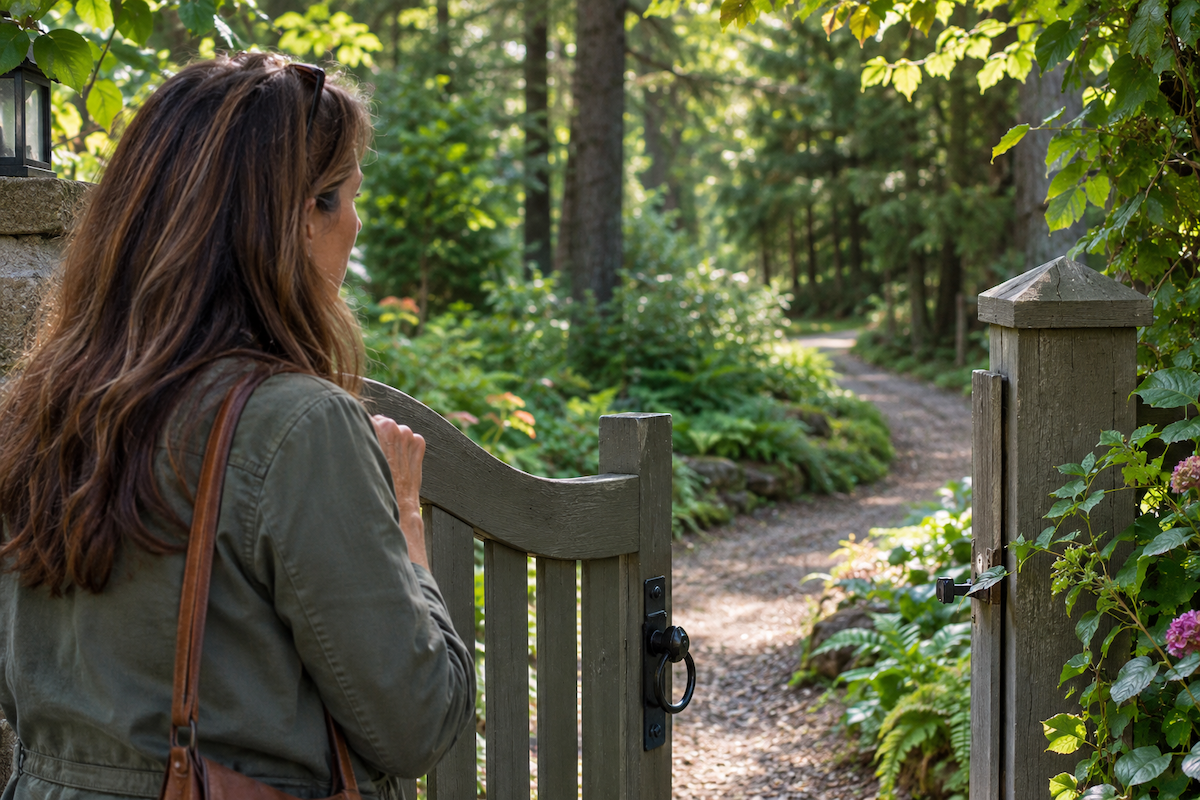
Since I left my career, I’ve been blessed with enough space in my day to be a little bit more introspective and that’s provided me with a blessing I didn’t anticipate.
For decades, my days were so full that “thinking” meant whatever happened in the car between one demand and the next. Now, every so often, I catch myself standing a little outside my own life, watching myself make decisions the way a stranger might. It’s fascinating. It’s also occasionally alarming, like seeing yourself how others might see you for the very first time.
What I keep noticing, and it’s been about six months now, is how many tiny doors I close without ever really deciding to. Not the big, dramatic decisions. The small ones. Whether to say yes to the invitation that means driving home in the dark from another town. Or whether to take on a project that involves learning something completely new.
Each one is so small it never earns a second look. But add up a few hundred of them and you have a lifestyle, assembled one comfortable “no, I’ll pass” at a time.
Some of those no’s are genuine wisdom. I’m sure of that. But some are just worry wearing wisdom’s coat, and from the inside, the two feel exactly the same.
So how do you tell the difference?
The fears nobody admits to
I’ve started calling them micro-fears: the tiny things we’ve never done, or never quite managed, because something in us hesitates. They aren’t necessarily phobias. Sometimes they’re just unfamiliar situations that make us uncomfortable, embarrassed or unsure of ourselves.
Showing up to a social event alone where we know no one, for instance. A few years ago, I backed out of attending a Halloween costume party thrown by the local Army and Navy Club. Having put it on my calendar and made plans to go, in the end I just couldn’t picture myself showing up completely alone, in costume, and trying to interact with a roomful of strangers, find someone to dance with, hold any semblance of conversation over loud music, and actually have a good time. Too bad. Maybe that was the moment I was going to meet someone who would become really important to me. I’ll never know.
Or booking an Airbnb and staying in the place by yourself. I get it. I’ve stayed in plenty of hotels and Bed and Breakfasts on my own and had no trouble doing so. But actually staying in some private citizen’s home and feeling comfortable that nobody else has the key, or there isn’t a hidden camera, or that the sheets, guaranteed, got washed after the last guest. That’s where I’ve hesitated.
Some people avoid parallel parking in a tight spot where people might be watching. They’ll park a couple of blocks further away just to avoid it.
Here’s what makes these things tricky. We tell ourselves they’re small. They’re just simple skills, after all. So the fear arrives with a side order of shame, and shame keeps its mouth shut. We assume everyone else sails through these things without a flutter, which means, we conclude, there must be something wrong with us.
So we say nothing, sometimes for years, and quietly rearrange our lives around the gap. Tiny fibs, subtle shuffling, a great deal of “you’re so much better at that than I am.” Or, “I just didn’t feel like doing it after all.”
If you share your life with someone, this can go on for decades without anyone noticing, because a micro-fear can actually pass for a preference. He likes to make the phone calls. She’s quicker with the tech than I am.
Nobody’s lying, exactly. It’s just how a household divides the labour.
And if you both happen to be secretly afraid of the same thing, you get that lovely moment where you confess, have a giggle and feel a little less alone. I remember how that was.
Being solo and older now, I’ve really taken note of how many small opportunities or experiences I am not having, in comparison to family and friends I know, simply because they are leaning on a partner’s support to succeed at whatever it is. I’m trying to go it alone, but I have a micro-fear standing in the way.
Facing the grill
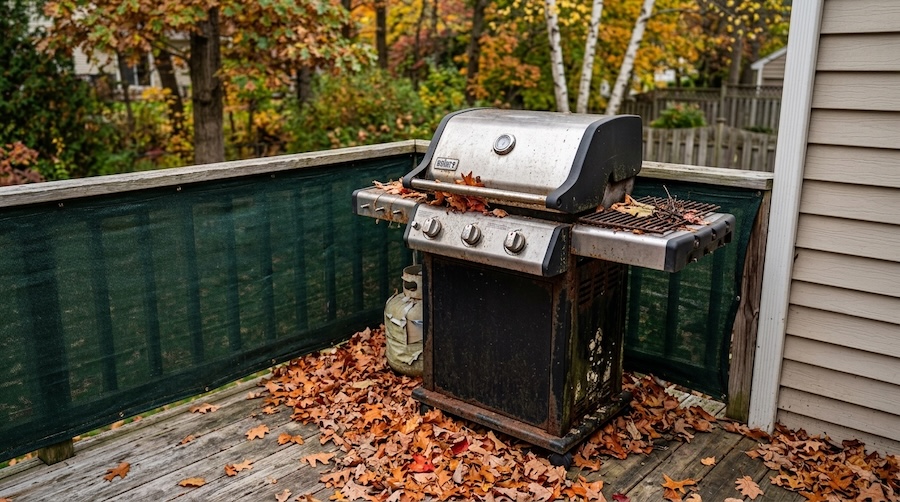
For the twenty-five years I was married, I never lit our gas barbeque. If my husband wasn’t home to cook, nothing got grilled. I called that a preference.
It wasn’t.
I was convinced the thing was going to blow up in my face, or that the tank would explode on the hottest days of summer. I never said so out loud, because even I knew how that sounded.
Then I was on my own, and the barbeque was just sitting there. If I wanted grilled anything, I was going to have to deal with it.
It took me longer than I’ll ever admit to work up the nerve. But I taught myself, and it was, of course, not hard. No explosion. No fireball. All eyebrows accounted for.
And yet I never got comfortable.
When my tank ran out of gas, it meant I needed to go to the refill station at Canadian Tire and transport another full tank home in my car. That stressed me out. I imagined that this would be the day I got rear-ended and my car went up in a massive fireball, me along with it.
Then I had to reattach the gas tank to the hose, and the hissing stressed me out all over again. Aware that I didn’t know what I was doing, I swallowed my pride and asked my next-door neighbour to help me. He did, graciously, but I was terribly embarrassed. I imagined he must think it was a ridiculous thing for a grown woman to be afraid of, even though he was perfectly kind about it. In hindsight, I suspect I was much harder on myself than he was. He even offered to help me anytime. But after that, I rarely planned a meal around the barbeque. Eventually, I sold it, after it had spent long enough gathering cobwebs and rusting out from lack of use.
So I conquered the fear and still lost to the barbeque anyway.
Which has made me wonder about the gap between being able to do something and being willing to build it into your life.
The barbeque taught me something I hadn’t expected. Sometimes we avoid things because we’re afraid we can’t do them. Sometimes we discover we can do them, but decide the effort or anxiety isn’t worth it. There’s nothing wrong with the second choice. The trick is knowing which decision we’re making.
I don’t want to spend the next twenty years forcing myself to do things I dislike just to prove I’m capable. But I also don’t want to wake up one day and realize I’ve quietly ruled out a whole collection of experiences that might have added something to my life, simply because I never got comfortable with the idea of trying them.
And I suspect most of us have our own versions of this, without talking about them nearly enough.
I’ve started wondering what else I’ve quietly closed the door on. What were the ordinary things that used to be part of my world, when I could lean on someone else, that I no longer do? Which of those things have I deliberately left behind, and which have I simply allowed to disappear because of a little discomfort I never bothered to examine?
I want to bring some of those experiences back into my life before it becomes smaller and more comfortable than I’d like.
Last month, I gave myself a challenge: one new thing, one new experience or one new skill each month for the next twelve months.
I’ve already counted six new things in the first month. I’m writing them down. I suspect some of them had a micro-fear attached that had prevented me from doing them for decades.
That’s rather a lot of time to let a small fear make your decisions for you.
Caution or fear?
Not everything we avoid is a silly fear, and I don’t want to pretend otherwise.
A woman who thinks twice before getting into a stranger’s car alone, even when using a familiar rideshare service, isn’t necessarily being timid. She’s weighing the risks.
Someone who stays off the highway in a snowstorm has simply seen a lot of accidents and close calls in their time. Plenty of caution is earned, sometimes the hard way, by people who understand what can go wrong and what recovery costs when nobody’s around to help.
I’ve come to realize that what may look like timidity from the outside may simply be someone making a different calculation, based on experiences (past or present) we know nothing about.
The trouble is that the fear of making a phone call and the wisdom of staying off a dark road can feel remarkably similar from the inside. Both can sound like, “I’d rather not.”
And this is where, for me, age comes in.
As we get older, our circumstances and physical capacities change. Some things genuinely become harder or less sensible to do. Recovery can take longer, and we may have more to lose if something goes wrong.
But there’s another side to that. Opportunities can disappear gradually, and sometimes we don’t notice until we’ve been living without them for years.
In so many instances, the stakes can be higher for those of us over 55. We want to design a life of comfort, feeling free enough finally to no longer be doing things we don’t want to do. But we also want to remain capable, connected and willing to try things and that means sometimes overriding our own internal software system that is looking for the easy way out.
Living solo sharpens all of this. There’s nobody to defer to. If I don’t do it, it doesn’t get done, so the fear can’t hide behind “preference” anymore.
I know two women who get cold feet in the days before every trip. They lose sleep, they regret booking, and then they go anyway, with their partners at their elbows, and have a marvellous time. I’m glad they do. Having someone beside you doesn’t necessarily take away the fear, but it does mean you have someone to lean on when the doubts creep in. And it also means you’ve made a commitment to somebody else and, in this case, cancelling would impact another person.
I sometimes wonder how different that experience would be if they were travelling alone. When you’re solo, you have to find a way to talk yourself through those moments, or find someone else who can help you do it from a distance because it’s just too easy to give ourselves permission to back out.
That doesn’t mean for this example that travelling alone is necessarily harder for everyone, or that having a partner makes someone less capable. It simply means the support available to us can change how manageable a frightening experience feels.
So, is it better to be pushed into facing your fears?
There’s a case for yes. Every time you do something you dreaded and nothing terrible happens, you learn, I can do this. And I know plenty of solo folks who are quietly far more capable than they ever planned to be.
But facing a big fear alone is genuinely harder. And weeks of dread take their toll on a person.
I suspect the how matters more than the whether. A small step, a friend on the phone, a practice run: that beats a giant leap alone every time.
Sometimes the bravest thing solos can do is admit that something makes you nervous and ask for a little help. It’s not always easy to be that vulnerable, particularly when the task seems so ordinary that you think you should be able to manage it without assistance.
For those of you who do not have to face those tiny micro-fears we all carry with us alone, due to living with others who soften your journey, I encourage you to face a few of those uncomfortable moments. See what it’s like to have to rely solely on yourself. At the very least, you’ll feel proud of yourself for conquering these small but significant mental barriers that sometimes shape a life.
Even if nobody else knows what it took for you to do something that seemed perfectly ordinary to others, you’ll know the importance of what you’ve accomplished.
That counts for something.
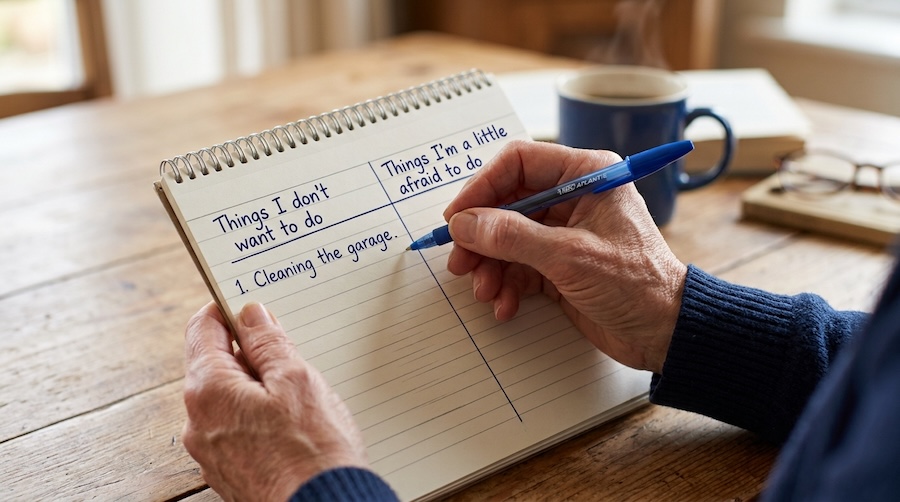
See if you spot yours
I went hunting for examples of the small fears and discomforts people don’t always talk about. I was curious to see how common my own fears might be, and what other people find daunting that I don’t give a second thought to because it’s never been a problem for me.
Here are a few. If you recognize yourself, welcome. You’re in very good company.
Social situations
- Making phone calls to strangers or businesses, or leaving a message
- Walking into a room where everybody already knows everybody
- Eating alone in a restaurant that isn’t a fast-food joint
- Appearing on camera in a video call
- Knocking on your neighbour’s door when you hardly know them
- Dancing in front of others
- Asking a stranger out for coffee
Driving and getting around
- Parallel parking with an audience
- Merging onto a busy highway
- Using a new gas pump or EV charger for the first time
- Figuring out how to pay at an unfamiliar parking machine
Household and everyday tasks
- Answering the door when you weren’t expecting anyone
- Lighting the furnace, fireplace or barbeque
- Investigating a noise in the basement at night
- Dealing with spiders, mice or wasps
- Climbing a ladder
- Changing a smoke alarm battery
- Operating a snowblower, hand drill or power saw
- Riding in elevators
Technology, money and other grown-up responsibilities
- Ordering food over the phone and figuring out the payment and tip
- Disputing a bill or negotiating with a contractor
- Setting up new technology
- Making investment decisions or calling your brokerage with instructions
And, of course, needles or giving blood.
These aren’t necessarily dramatic fears. Some are simply things we don’t feel confident doing, or situations that make us uncomfortable.
If yours isn’t on the list, there’s nothing wrong with you. There are plenty more where those came from.
Now I’m not suggesting we all need to become fearless, take up extreme sports or spend our retirement deliberately making ourselves uncomfortable. Good grief. There are enough things in life to stress us out without forcing ourselves into unpleasant situations all the time.
But I do think there’s value in occasionally asking ourselves whether we’re making a choice because it suits us, or because we’ve become so accustomed to avoiding something that we’ve stopped considering it altogether.
I’m still figuring that out myself.
But I’m also being a lot more intentional these days. With my ‘one new thing project’ I just got back from a 3 day solo trip that included 2 nights at an Airbnb. It went fine. I actually can’t tell you whether the pillow cases were clean, they didn’t smell freshly washed or look ‘crisp’, but they weren’t gross either. The towels smelt mildewy. The lock on the exterior door was a joke, and I definitely wouldn’t go back. But, it was fine. I survived. I slept, albeit with the light on. It was cheaper than a hotel, and I’m proud of myself for seeing it through. And since it’s October, I’ve signed up to go to a Halloween Murder Mystery (in costume), alone, where I know no one. Wish me luck! I promise I won’t back out this time.
What micro-fears of yours may be holding you back? Share in the comments. I promise not to laugh.
I sold my barbeque; I’m in no position to judge.
Let’s Dive into the Over 50 Lifestyle!
Discover practical advice and share in the ever present thoughts about embracing a fulfilling lifestyle “the Canadian way” by reading my blogs.
The Solo Living Perspective
When I write, I try to consider both the solo and partnered experiences. After all, I’ve had the benefit of both. But there’s no question that when I became single I discovered that living solo comes with it, its own set of rewards — and a few unique challenges. Finding balance, staying motivated, and managing everything on your own can take extra time and energy. When there’s no one to tag in, you learn to plan smarter and rely on your own resilience. Still, connecting with others who share the solo experience can make the road ahead feel a lot lighter and 14 years ago when I became single I found very little to offer in the way of guidance or resources. If I can provide anything of help to others who may be looking for some answers to some of the challenges they may face in living alone, I’m happy to do so.
Why Mid-Life?
Mid-life is such a powerful time to rediscover yourself — to redefine independence and create a life that truly fits you. Yet, until recently this demographic has rarely been represented in media or marketing. People over 50 are often portrayed as frail and in poor health, not contributing to society, not participating outside of the home, and often believed to be just sitting around the house watching tv. This seems more like somebody closer to the end of their life, in their 80s and 90s, not people in their 50s, 60s and 70s who are often now feeling in the prime of their lives. With so many Canadians over 50, it’s time to change that narrative and shine a light on what it really means to thrive in mid-life+.
Join the Conversation…Speak Up, Live Bravely, Be Proud!
I invite you to share your stories, insights, and experiences of living in Canada in midlife and beyond. Your voice will help enrich and strengthen our community. As I am a woman, it would be fantastic to hear just as many stories from men, so that my male audience might see themselves in these stories too. Think about it.
Photo by FreePik
Watch my videos on YouTube channel by the same name (Solo in Canada: Musings at Mid-Life+)