
Undercover Since Birth
There’s something that changes in you as you reach the other side of 60 that no one actually prepares you for. It isn’t the endlessly aching joints, or the fact that you’re suddenly adept at getting injured through the simple act of sleeping or sneezing. No, those two topics are frequent crowd pleasers for conversation in any social function for the over 60 crowd. It’s the slow realization that you don’t actually have to keep pretending anymore.
Not that I ever consciously made a choice to put on some kind of fake performance. It’s just that somehow I think I acquired an image of the way in which I should represent myself based on the roles I find myself in.
It changed how I held myself, my way of communicating, which might foster confidence others had in my abilities. I knew that there were ways to encourage or discourage getting along with others.
Over time I learned how to behave in different situations. I softened parts of myself here, emphasized other parts there, and before long, I hardly noticed I was doing it. I wasn’t trying to manipulate; I was just allowing for the greatest chance of success.
I think that most people likely spend a lot of their lives doing exactly the same thing. It’s just that it’s so perfectly socialized in us at the earliest stages of life, that we don’t even think of it as a performance.
Smoothing Things Over, One Mistake at a Time
We seamlessly edit ourselves when the feedback we get isn’t encouraging.
We hide the mistakes we’ve made, because we feel shame about having made them in the first place. We should have been more in tune, smarter, more capable.
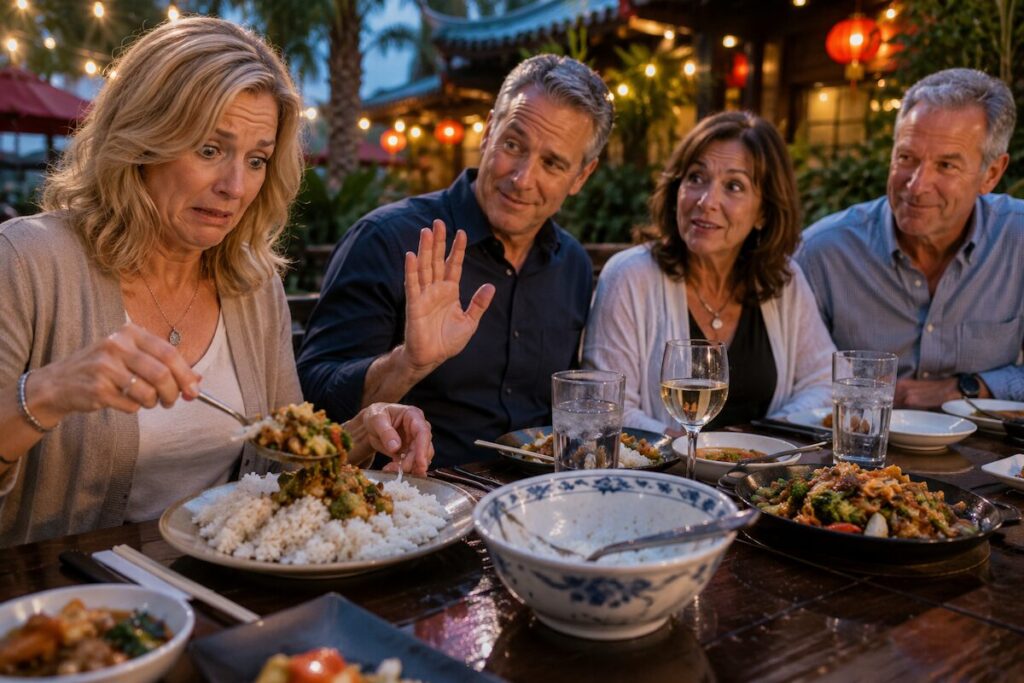
We’ve all experienced the embarrassment felt when our own honest miscalculation was witnessed by others. Like the time I took the shared bowl of rice delivered to our table at an Asian restaurant entirely for myself.
Rather than placing the bowl more central, the server had placed it just above and to the right of my plate. Not taking the required time to survey the scene, I scooped up said bowl, unceremoniously dumping its entire contents onto the centre of my plate. I guess to the others (two I had just met that night, and one I didn’t know well), I looked somewhat rude or uncultured, provincial at best.
I was mortified when my date had to call over the waiter and ask for another bowl for the others at the table.
I awkwardly mumbled something about not expecting the dish to be shared, which didn’t help to improve the impression others were forming of my suitability for dinner company.
Why couldn’t I have just apologized for my misunderstanding, and had a little giggle over it?
I still think about that moment from time to time. I’m willing to bet everyone else at that table forgot it before dessert arrived. Funny how our own embarrassing moments become permanent residents in our memory while everyone else barely registers.
We learn to perform for the audiences that surround us. Somewhere along the way, many of us learn that being likeable means being polished. Being competent means never looking uncertain. And being strong means never letting anyone see the cracks. How’s that working for you?
Fine, Thanks, and Other Canadian Lies
Even something as simple as a friendly greeting. In our Canadian culture, it’s customary to ask someone how they are as you first greet one another. It’s so ingrained that you can be asked that very question at least 10x on any given day.
As a result, most of us respond with a canned, “I’m good”, without giving it a moment’s thought as to its accuracy. It doesn’t even have to reflect how we actually are.
In fact, it might even appear odd if someone responded with anything other than good.
I don’t remember anyone ever sitting me down and teaching those lessons. Life just seemed to reinforce them over and over again.
Work certainly did.
Nowhere did I learn to hide my limitations more thoroughly than in my career. Teaching was immensely rewarding, but it could also feel like an environment where everyone was quietly evaluating everyone else. Every new educational initiative came with another expectation that you should already know how to do it. If you didn’t, you caught up quickly—and preferably without anyone noticing you’d been behind in the first place.
It meant endless retraining, no year taught like the one before. Looking back, I’m glad I kept learning—it made me a better educator in some respects—but there were downsides. It’s difficult to ever develop mastery over something when the foundations keep changing. And the motivation lurking underneath constant change it wasn’t great. It’s not growth. It’s:
Fear.
Fear of looking incompetent.
Fear of disappointing people.
Fear of being judged.
In a weird way when I retired, the opportunity still existed to feel judged as there are so many ways to live your life and spend your time when work is no longer filling your days.
And the instinct to perform didn’t just disappear overnight. It’s an ingrained reflex that takes time to fade.
Everybody wants to know what you are doing with all that freedom. It feels like a trick question. No matter how you answer it, you’re either leaving a positive impression or a negative one in the mind of the person asking, and it all comes down to what they’d do if in your shoes.
I’ve pretended I was coping better than I was at times because let’s face it, retirement is a major change to one’s way of living. It takes a couple of years to get into a rhythm, but that part of retirement isn’t often talked about.
There’s an entire psychological earthquake that happens when you leave the workforce that is almost a complete secret even though most people experience it. For those lucky few who don’t, you’ll often hear them proclaim this fact with a touch of smugness, implying that there’s something less well-adjusted with those who didn’t excel from the get-go.
Perhaps the secret was due to the fact, that those majority it seems who had to work through initial struggles when changing lifestyles didn’t feel comfortable enough to admit that to others.
It’s amazing how long workplace survival skills can follow us into lives that no longer require them.
Free At Last, or Are We?
Will most of us come to a place where we no longer care what others think or would have done if in our place?
I hope so.
Will we no longer care that some have sold their houses and decided to travel the world, while others have decided to grow an extensive garden?
Some managed to save millions in investments, so the fear of running out of money to fund their abundant lifestyles doesn’t exist. While many just want to ensure their income will keep the bills paid, with enough left over for simple pleasures.
Some have retreated to a rural property and removed themselves from the fast pace of life, while others embraced civic responsibility through volunteering and/or activism.
And yet with all the freedom of choice in ways to live the final third of our lives, I still see a lot of people trying to prove they are always being productive, most assuredly making a difference in the lives of others, and have made savvy choices to set them up for ‘success’. The shields are still up and the masks still on.
Lately, I’ve found myself questioning why they (and occasionally me) feel the need to continue to perform. What exactly are we all protecting? Do we really want social relationships built on the version of us that’s always competent? Always the winner!
If we have to keep acting in order for people to like us, or respect us, are they really liking our true selves? Isn’t it just a whole lot easier to be around people who like you “as is”, warts and all?
Because what do we really gain if we have to always present in a particular way.
Maybe authenticity isn’t becoming someone new.
Maybe it’s slowly giving yourself permission to stop editing the person you already are.
One Zucchini, Zero Regrets
I’ve decided to no longer pretend I have all the answers. I’ve become much quicker to laugh at myself, especially as I learn new hobbies.
I’ve taken up gardening, and this is my third summer. My first two, knowing nothing about sun and water tolerance, insect invasions and fertilizing, my vegetable crops were a bust. The first year, everything died. Last year, my plantings yielded exactly one zucchini and a handful of cherry tomatoes. Total failure, but who cares? Twenty years ago I might have registered the failure more, and given up.
Now, I’m able to pat myself on the back for learning a thing or two, and acknowledge that at least it got me off the couch and outdoors into the sunshine.
Finally this year, it looks like I may have a decent chance at some vegetable gardening success.
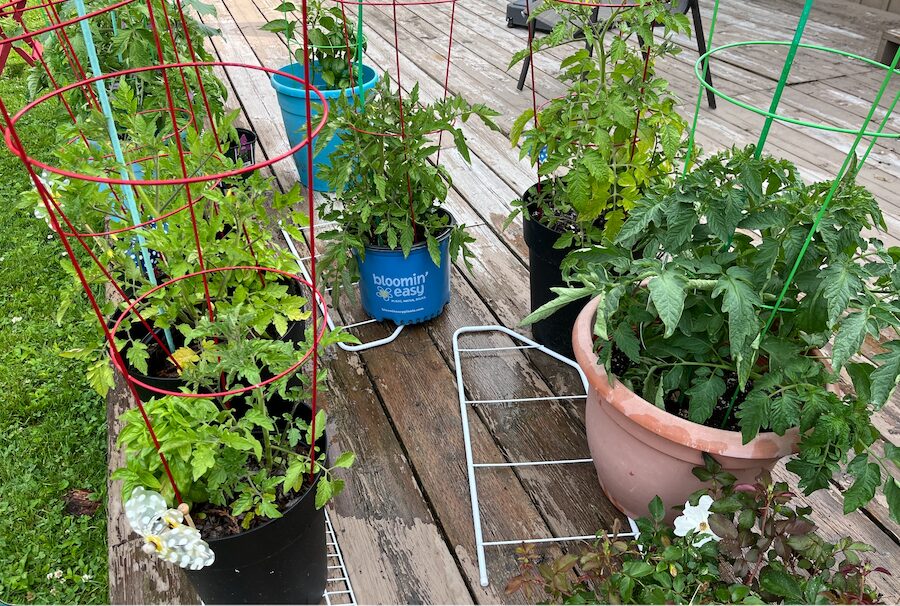
My flower and shrub gardens look like they are thriving as well, and I’m actually getting a lot more joy out of spending time in the greenery than I expected. It doesn’t matter that my neighbour has 3x the size of my container crop gathering.
I didn’t care whether my garden equalled the size of the more experienced homesteaders. I was simply enjoying learning.
Now this neighbour and I have new topics to discuss that we didn’t before. The truth is, although I’ve seen her around, I’ve never spoken to her—until I stopped to ask about her enormous kale plants and the thriving greenery in that back planter box.
Self-Sufficiency, A Retraction
It’s also made me notice something about relationships. For years I thought being independent meant needing as little as possible from other people. I was trained to be as self-sufficient as possible from a very early age. The less I needed anything, the better.
The trait is a double edged sword. It has served me well in so many ways, but there’s a dark side to it. I suspect that’s especially true for those of us who are solo and living alone.
We pride ourselves on handling everything on our own. We don’t want, or maybe somehow got the message, that if we have chosen to live solo, we’d better not become a burden to others.
I’m beginning to wonder whether this extreme independence sometimes holds people farther away than we realize. Friendship isn’t built only on doing things for other people. It’s also built on letting other people occasionally do something for us.
A neighbour watering your plants while you are away.
A friend driving you to an appointment.
Those tiny moments aren’t evidence that you’ve failed at independence. They’re often the very moments that deepen connection. I’ve spent much of my life trying not to need anyone because I thought that was what I was supposed to do.
I thought that was what we were all supposed to do when we became full fledged adults. I’m not convinced that’s the goal anymore.
Perhaps the goal isn’t complete self-sufficiency. Perhaps it’s becoming comfortable enough with yourself that you no longer have to prove anything—least of all that you can do everything alone.
The Great Sandbag Surrender
When I finally made it known this spring during a neighbourhood flood that I was in need of help with the heavy sandbags, I met three new neighbours. The mood was friendly, generous, open and accepting.
They didn’t look annoyed or overburdened. Far from it. They genuinely looked like they felt pretty good about helping a solo older woman within their community.
It made me a little emotional if I’m being perfectly honest.
Sometimes in those little moments you suddenly realize just how long you’ve been trying to be strong, and just how tired you actually are.
It’s a bit scary asking our inner guard to stand down, but I’m determined to do it. I think my life will be all the richer for it.
I have a feeling that the older I get, the less I’m focused on being good enough to pass muster. It’s more about the reciprocity of relationships, allowing you to show me who you are, and me to do the same.
What about you?
IF you enjoyed this article there are more on my blog page here
If you are more of a video consumer please visit my YouTube channel
Leave a Reply