
Trying to make sense of uncertainty without overreacting—or ignoring it

What is the Moment When Preppers Become Insightful Smart Thinkers?
There are a whole stream of thoughts that keep floating around in my mind lately, creating this low-level background buzz that lingers. While not completely disturbing, I will admit to feeling a little unsettled by them. Those thoughts narrow down to a question I have, and I don’t know if it’s just me or if others are wondering the same thing.
How is everyone else coping right now?
I don’t mean in the visible, day-to-day sense. We’re all still doing what we do—running errands, maintaining routines, showing up for others. On the surface, life is behaving. But underneath that?
With everything we’re being told, shown, and repeatedly exposed to—over and over and over again—how are people actually processing the significant political, economic, technological, and social events of 2026?
The outer messaging has become anything but subtle. It dominates the news, floods social media, and is overheard in everyday conversations. Clickbait headlines and news banners use dramatic, apocalyptic language—even coming from the President of the United States.
We’re constantly being drawn to issues at a heightened level. Between the rise in the cost of living, shifting geopolitics, and the constant unexpected curveballs when systems make unprecedented changes, things can feel very disrupted.
For a little context, as I write this article today the U.S. has given Iran a deadline of coming to a ceasefire agreement by 8pm tonight, or they’ll bomb every bridge, power plant and maybe their desalination plants as well.
If that weren’t enough, weekly announcements appear about large corporate layoffs, the threat of AI taking everyone’s job in 5 years, and a record number of people using food banks to get by.
The Graphic Theatre of 2026

We’ve been through military conflicts and small-scale wars happening “over there” before. We’ve lived through recessions and high inflation. We’ve had to tighten our belts, cut back on household costs, and go back to basics to get through for a spell. Nothing new there.
My ex-husband and I had at least 10 years as our young family grew, cutting corners in every way possible: I made the kids’ clothes & Halloween costumes, homemade Christmas, wedding and baby gifts, used a grinder to make baby food, washed cloth diapers and reserved the Huggies for night time, traded off childcare with neighbours rather than paying for it, and my ex worked a part-time job on top of his full-time job. That “2 jobs just for one year” plan lasted 6 years, as we navigated the 1990s recession.
We’ve all recently added to our knowledge of “what could happen, and just might” through our experiences with a global pandemic. Never thought I’d see the day. But we did, and most of us survived. For those who had loved ones who didn’t, my thoughts and condolences are with you, always.
We’ve even seen the power grid under strain. There was a time when the radio would broadcast the hours in the day when there would be an energy brownout so that we could plan our schedule around the availability of power.
And many of us remember exactly where we were in August 2003 when the power went down for days across Eastern Ontario, Canada and the Northeastern U.S. For my city specifically, the power was out for 3 days!
We muddled through with flashlights and barbecues, knowing it was an unfortunate episode. Tried to stay cool when temperatures were soaring, and made the best of it because we knew it was temporary.
We were saddened to hear that of the few small stores that did open during shortened daylight hours with “cash only” announcements, those same stores had jacked the price for water and other staples up 5x what they were going for the day before.
Ya, I know, “it’s supply and demand baby”. But it was a shock to see just how quickly a community hardship turns from cooperation to greed. I guess Canadians aren’t as kind as we’d all like to think, are they?
But even with that, somehow, in 2026, there’s a feeling that something new—something we’ve never experienced before—is just around the corner.
Could it just be the central role that the media plays in providing our information through graphic theatre that makes everything feel different this time around?
New policies are now being made to cut costs in ways we never thought would be considered? Safety nets and standard modes of operation are changing. Even social decorum—respectful interactions, polite and basic decency—seems to be in a state of decline that we feel unable to influence.
More and more people are behaving toward one another in ways that would have been considered antisocial and unacceptable just a decade ago. The “we are all in this together” mantra has gone the way of the dodo bird, and “every man for himself” has taken centre stage. You can probably think of examples of this even within your own extended family or social group if you look with a more objective lens.
Areas of Uncertainty: Numbers on a Screen

I find myself wondering: Are people taking this information in and then just carrying on? Is that the wise approach? Or are they, like me, having these quiet moments where something doesn’t quite settle the way it used to in their psyche? That subtle feeling—call it instinct or intuition—that tells you there’s a storm coming and you’d better get ready for it.
What is the right course of action when your “long-term plan” suddenly doesn’t feel all that long-term? If your working years are winding down now, what do you do when the systems you trusted to carry you forward start to feel less guaranteed?
And is employment any more of a guarantee? Depending on the emergency, it could be that the job you assumed would always be there just isn’t anymore.
When your life savings are tied up in your home, in the markets, or in accounts like RRSPs and TFSAs that technically exist but are also, in a very real sense, just numbers on a screen—do you ever stop and wonder how durable any of it actually is?
Not in a dramatic, end-of-the-world way, but in a practical, “what’s my exposure here?” kind of way.
What happens if something interrupts the flow? What’s the plan if the unthinkable happens—the things that usually happen “somewhere else,” in smaller countries, that we’ve never had to seriously consider?
What if the disruption is not permanent, but lasts long enough that you need a significant buffer?
Most of us continue forward on the assumption that what has always worked will continue to work because it always has.
But that’s not what happened in the market crash of 2008 or the global pandemic of 2020.
The changes came fast and hit hard.
Systems buckled. Some suffered much more than others because the timing was just too much at odds for a full recovery.
When “That’s a Bit Extreme” becomes Prudent
There was a time—not that long ago—when certain mindsets were easy to dismiss. Over-preparedness and contingency planning were often mocked. We’ve been socialized to believe that preparing for major shifts belongs to “other people”—the “preppers” who seemed “a little odd”, or the “homesteaders” who were a little too “granola” for the mainstream.
But at what point does that line start to blur? When does “a bit much” quietly become “possibly reasonable”?
The environment around us has changed. Are we the frog who doesn’t realise the temperature of the water is rising?
At what exact temperature is it time to leave the pot?
If that shift is happening, it raises an uncomfortable question: Are we adapting to reality, or are we still anchored to a version of stability that no longer quite fits?
History Doesn’t Whisper—It Repeats
One of the more unsettling patterns in history is how often the signs were visible. Not hidden, just inconvenient.
The Great Depression provides a chilling example. Those who reduced debt early, held cash reserves, or shifted into more essential work weathered the storm better. They weren’t psychics; they were simply willing to act before they felt fully comfortable doing so.
There is a cost to waiting. The nature of big shifts—economic, social, structural—is that by the time they’re obvious, they’re already well underway.
The fear of being wrong too early often outweighs the fear of being right too late, which keeps most people exactly where they are: stuck.
The Illusion of the “Paid-For” Home
We’ve been taught that a mortgage-free home is the ultimate safety net. But in a world of runaway inflation or systemic shifts, even a “paid-for” home faces risks we rarely discuss.
If the dollar loses its integrity, the homes lose their value as well. During the Toronto 1989-1996 Housing Crash, homes declined 27% in value and took years to recover. Many found themselves in significant debt with homes worth less than their mortgage. It was a form of “worthlessness” where equity was entirely wiped out.
The Conversation We Might Be Avoiding
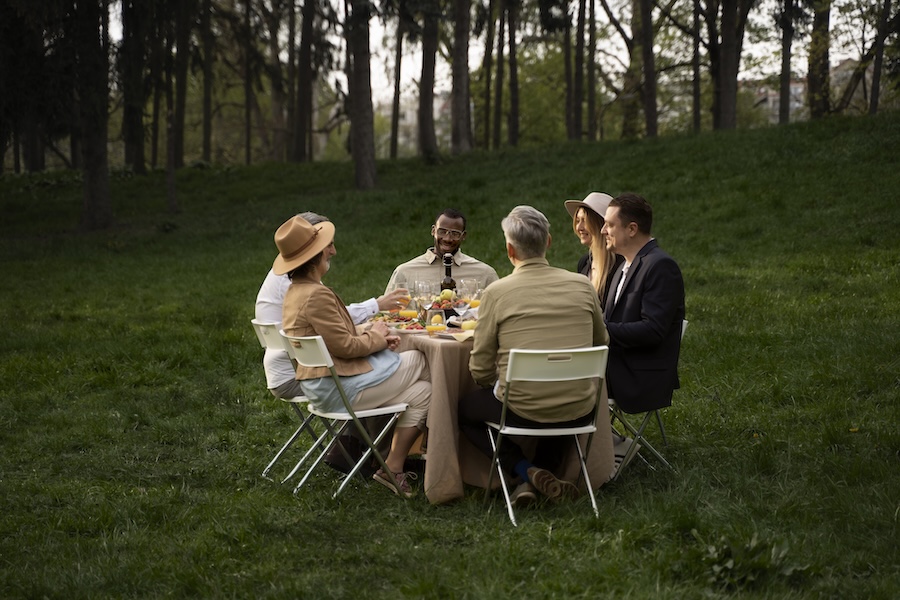
Have we talked to the people closest to us about any of this? And who, specifically, are those people for you? Don’t just say “family.” Which family members? Are you sure those same people feel you would be in their lifeboat too?
You need to know this. It’s no good to make assumptions and then, at the time of crisis, discover they are taking a different course—one that doesn’t include you.
The conversation has to be approached properly. Not in a dramatic, end-of-days tone, or in a silly, joking way, but practically.
For a long time, we’ve operated under a model of individual responsibility. Once kids reach adulthood, they fly the coop. Many move away in pursuit of work and a different lifestyle.
Perhaps your family won’t be your support system, and it’s important to realize that now. If they aren’t, then who will be?
You might have a close group of friends, but when challenges arise, they may retreat to their own families, leaving you on your own. You need to identify who you can rely on—and who will, in turn, rely on you.
If you sense your relationships are fragile, it’s time to strengthen those bonds. You’ll need a tribe. Living independently works—until it doesn’t.
A Practical Checklist for Low-Regret Moves
This isn’t a survivalist guide. It’s about reducing fragility in quiet, reasonable ways so that if something shifts, you’re adjusting… not scrambling. Think of it as building margin into your life.
1. Financial Flexibility
- The Question: Do you have access to liquid funds that aren’t tied up in long-term vehicles with penalties? If income were interrupted for 6 months, what actually happens? If the banks go offline how long will you last?
- Low-regret move: Gradually increase accessible reserves. Having $1,000 in cash is worth its weight in gold if the digital grid goes down for a few weeks.
2. Housing Optionality
- The Question: Could your current living situation be adjusted if needed? Have you had a preliminary conversation about shared living arrangements?
- Low-regret move: Explore options early. Conversations are much easier when they are hypothetical than when they are forced by a crisis. And make the moves sooner rather than later to co-house if you’re already under strain.
3. Income Resilience
- The Question: Are you fully dependent on a single income source or a government system? Do you have a skill that could generate even modest income if the primary source paused?
- Low-regret move: Develop a secondary skill or small “side-hustle” that relies on tangible value rather than a complex corporate system. And it’s best to avoid luxury wants and focus on what people will need, even when times are tight.
4. System Awareness
- The Question: If the supply chain paused temporarily, what would your 2 weeks look like?
- Low-regret move: Maintain a modest buffer of essentials. Pick up one extra item each week—kibble and kitty litter for the cat, food staples that don’t require cooking, an extra tank for your bbq and extra drinking water. It’s not extreme; it’s just building a few weeks of breathing room.
5. Social Infrastructure
- The Question: Are your relationships built on convenience or resilience?
- Low-regret move: Strengthen a few key relationships intentionally. Know who you can count on and who can count on you.
6. Transportation Without Gas
- The Question: If the price of fuel shoots up exponentially or shortages occur, how do you get around?
- Low-regret move: Keep that old bike in the shed tuned up. Ensure you are positioned to do at least some errands on foot. Of course, this doesn’t work for the 4-5 months of winter for some of us, but there’s still 7-8 months of the year where it does work.
7. Decision Timing
- The Question: What decisions are you delaying because they are uncomfortable?
- Low-regret move: Take one small step slightly ahead of your comfort level. If you have future plans to sell the asset, consolidate the household, or move to that rural setting and grow a food garden, maybe doing it now is something to consider. At the very least, reduce your “stuff” now so you can move more easily if and when you do make that move.
The Quiet Goal
The goal isn’t to predict the future or outmanoeuvre every possible scenario. It’s simply to avoid being in a position where all of your options require urgency at the same time. That is when people make decisions they didn’t want to make.
Historically, the people who fare better are not the ones who got everything right. They’re the ones who made a few key adjustments—just before they absolutely had to.
I don’t have answers as to where we are right now. I don’t think anyone does with certainty.
But history suggests something uncomfortable and oddly reassuring: Timing matters. Not perfect timing—just earlier than feels necessary. Moving away from unnecessary panic toward a more reasonable sense of calm.
Don’t wait until everyone in your lifeboat has individually gone bankrupt before you decide it’s time to team up. Agree to speak up at an earlier stage, combine resources and weather the storm from a place of strength rather than weakness.
Done early enough, if nothing happens, you’ve simply built a more flexible, intentional life. And if something does? You’re not trying to figure it out from scratch. You have something of value to throw into the pot when the time comes to pool your resources.
How are you navigating these thoughts? Are you seeing the signs too, or am I the only one wondering when the “ignoring” has to stop?
If you enjoyed this article, why not read my article on Money Mindset For Midlife Solos: Staying Grounded
I have a YouTube channel too. Check out my video on How to Nurture Friendships After 50.
Leave a Reply