

Building Support Networks When You’re Living Solo

How do we build and sustain meaningful relationships outside traditional structures?
Friendship is often treated as secondary to romantic or family relationships, yet for many adults—especially those living solo—it becomes the primary source of connection, support, and belonging.
This foundational piece explores friendship as a central life structure rather than a peripheral one. Friendships change over time, they require more intentional effort in adulthood, and they sustain us emotionally and socially.
This article serves as a hub for broader discussions about connection, loneliness, social courage, and community throughout the blog.
When you live alone in midlife, friendships aren’t just nice to have — they’re essential. They fill the quiet corners, bring laughter to the long days, and remind you that belonging doesn’t depend on being part of a couple. Friendship after 50 brings so much richness and depth to the quality of your living.
For those navigating life solo in their 50s and 60s, friends can become the glue that holds life together — emotionally, practically, and even physically.
In this post, I want to share the stories of three people — Adam, Fiona, and Marissa — who each represent a different side of solo life and the role friendships play in shaping a happy, connected midlife. Their stories might sound familiar. They might even sound like you.
Adam: Starting Over at 58
Adam never imagined he’d find himself completely alone at 58. After thirty years of marriage, his divorce didn’t just end a relationship — it ended his social life.
His wife had been the social planner, the one who organized dinner parties, sent Christmas cards, and stopped for chats with the neighbours.
When she left, so did the invitations. He realized only in hindsight how much he had disengaged from the responsibility to maintain authentic connections with others beyond his wife.
“It was like someone flipped a switch,” he says. “One day we were part of a group. The next day, I realized they were all really her friends.”
Adam had always thought of himself as independent. But independence isn’t the same as connection.
The weekends stretched long and quiet. He wasn’t interested in dating — he’d had enough of the couple scene. But he didn’t know how to make new friends either. “At our age, people already have their circles,” he’d tell himself. Finding friendship after 50 was going to be tough.
Most days, he figured he would be just fine functioning the way he was. But in his most honest moments with himself, he knew he was just surviving rather than thriving.
Adam worried he might be slowly developing a hard exterior, perhaps one day becoming a bitter, depressed old man. He wanted and deserved something better for himself.
It’s a common story, especially for men. An article in the Globe and Mail entitled “I love you, man: Why do men have such a difficult time maintaining friendships?” (June 14, 2019) points out that men in midlife are more likely to lose their social networks after divorce and less likely to rebuild them.
Women tend to maintain friendships across life stages; men often rely heavily on their spouse for social connections. But isolation has real consequences.
Research from the WHO (World Health Organization) has found that lacking social relationships increases health risks as much as smoking fifteen cigarettes a day. Here’s a link to the CBC story on that.
Loneliness affects not only emotional well-being but also heart health, immunity, and cognitive function. Being socially isolated decreases health span, life span and mental health.
For Adam, the realization came one Sunday afternoon when he’d spent the whole weekend in silence. “I hadn’t spoken to anyone in two days — not even the cashier at the grocery store,” he recalls. “I realized this can’t be it. This can’t be how the rest of my life looks.”
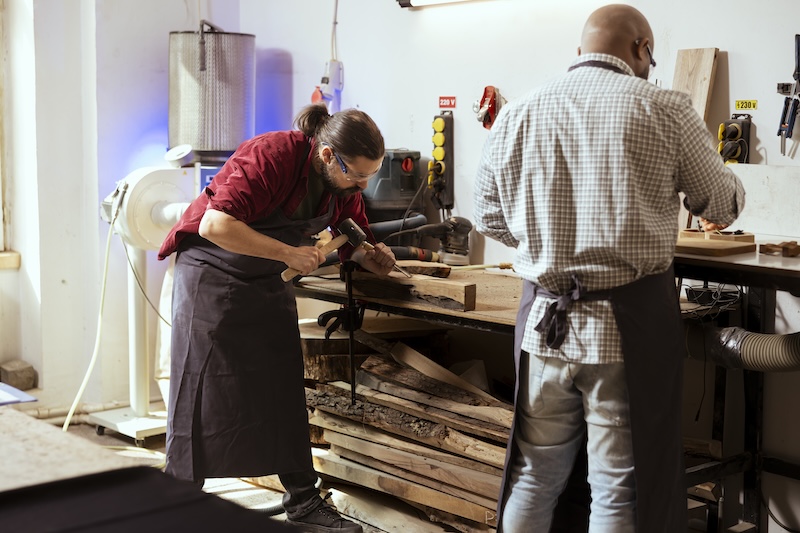
He started small. A neighbour mentioned a local woodworking club, and even though Adam wasn’t handy, he decided to go.
“At first, I just listened. But after a few weeks, I started chatting. Turns out, you don’t need to talk about feelings — just sanding techniques.”
Now he meets the same small group of men every Thursday evening at the workshop. They talk about projects, families, and sometimes — over coffee afterward — the harder stuff.
“It’s funny,” Adam says. “We don’t call each other ‘friends’ yet, but when I walk into that room, people know my name. They ask how my week’s been. That counts for something.”
What Adam discovered is that friendship doesn’t always start with deep conversation. It starts with consistency — showing up. The rest follows.
Fiona: The Friendship Keeper
If Adam’s story is about rebuilding, Fiona’s is about reinforcement. At 62, she’s been solo for six years after what she calls her “gray divorce.” Unlike Adam, she wasn’t left socially stranded.
Fiona has always been a joiner — a book club here, a yoga class there, volunteering at the local animal rescue. Even when she was married, she believed in keeping her own connections strong.
“My mother used to say, ‘Never put all your social eggs in one basket,’” she laughs. “She meant don’t rely on one person — even a spouse — to meet all your emotional needs.”
After her divorce, those friendships became her anchor. “They were there with casseroles and wine the first few weeks.
But more than that, they just showed up — they walked with me, called to check in, kept me laughing.”
Fiona has a diverse network — friends from work, neighbours, her women’s hiking group, and a couple of people she met through her volunteer activities at her church.
What she values most is reciprocity. “It’s not about who does what for whom. It’s about being part of a circle where everyone lifts each other up,” she says.
That circle has grown even more important as she’s gotten older. “It’s not just about companionship. It’s about practical support — someone to drive you to a medical appointment when they’ve advised you not to drive yourself home after, or check up on you after a surgery.”
Fiona also recognizes that friendships after 50 take care — they don’t maintain themselves. “You have to water them like plants,” she says. She’s intentional about staying connected:
- She schedules “Friend Fridays” — a casual coffee or lunch date every week with someone in her circle.
- She keeps a shared calendar for birthdays and sends handwritten notes.
- And she organizes a Facebook group to help create community with the residents in the little 5-street alcove of her neighbourhood.
- This same group is invited to monthly book clubs and twice a year pot lucks. Everyone is invited, and whoever shows, shows. No matter their age or stage in life, when she knows of a new neighbour moving in she lets them know about the neighbourhood Facebook group.
These efforts help her to feel like she belongs where she lives, she comes to know her neighbours, knowing she has people to turn to in an emergency.
They can be invaluable during the dreaded “snowed in” that typically happens at least 4 times every winter, when drivers rely on each other to push our cars when stuck, or to blow out the wall the plough just dropped at the end of the driveway.
“It’s not about being busy,” Fiona says. “It’s about belonging.”
Her friends have become her chosen family — the people she spends holiday celebrations with, watches firework displays on Canada Day and New Year’s with, plans card games and craft nights with, and calls when she has good news.
“When I got my first senior discount at Shopper’s at the age of 60, I texted my group chat. We all had a good laugh about it.”
Fiona’s story is a reminder that strong friendships don’t just happen by accident. They’re cultivated with care, time, and generosity.

Marissa: Rebuilding Confidence and Connection
At 53, Marissa still has two young adults at home and a calendar filled with rides to their part-time jobs, ski hills drop offs. She is currently visiting University and College campuses to help her kids make big decisions about their own futures.
But in the quiet spaces — after the laundry’s folded and the lights are out — she’s been trying to rediscover herself.
Her divorce, a few years ago, had chipped away at her confidence. “I spent so many years being someone’s wife, someone’s mom, someone’s planner — I forgot what it felt like to just be me.”
She wasn’t necessarily lonely — she had people around — but she missed the kind of friendship that nourishes you from the inside.
“I wanted to laugh, to talk about books or art or travel again. I wanted adult company that wasn’t about College funds or the latest TikTok trend.”
Two summers ago, she joined a women’s golf league, mostly for something to do. It was nice, but seasonal. So when winter rolled in, she joined a local photography club — something she’d always been curious about.
“I was nervous walking in,” she admits. “But after a few weeks, we started chatting more, and I realized how good it felt just to connect.”
One evening, she took the bold step to invite a few classmates for a drink after the session and to see a local art show the next weekend. “It felt like a middle-school moment — like, ‘Will they say yes?’ But they did!”
From there, something shifted. Marissa started organizing small get-togethers every few weeks — coffee after class and the occasional dinner at a local wings joint.
She also reconnected with an old friend and together they started a local walking group that meets automatically every Sunday morning throughout the winter months.
They extended invitations out to colleagues and neighbours, and it’s really taken off. “The best part? I don’t have to plan anything. I just show up.”
That structure — built-in, predictable — has been a lifeline. It’s taken the mental work out of socializing.
“I realized I don’t have to constantly ‘drum up’ plans. If something is already scheduled, I just go — and that makes all the difference.”
Over time, her acquaintances became friends. She found herself laughing again, feeling more confident, and even dreaming bigger for her life.
“Listening to other people’s stories reminded me that there’s so much still ahead. It’s like I found my spark again.”
Marissa’s story is about re-entry — rediscovering yourself through connection. Her new friendships are helping her heal, rebuild confidence, and see that solo life can be rich, vibrant, and full of possibility.

What These Stories Teach Us
Adam, Fiona, and Marissa’s experiences are unique, but they share a powerful truth: friendship is the heartbeat of a healthy solo life.
Whether you’re starting over like Adam, maintaining long-time bonds like Fiona, or rebuilding your confidence like Marissa — connection is the common thread.
In fact, Marissa’s children are about to step into the wider world, where they will need to take courageous steps to make new friends and create a community of their own.
Marissa’s own actions are providing a wonderful model for them to follow when they themselves experience a yearning for deeper social connectedness.
Friendships in midlife aren’t about quantity. They’re about closeness, consistency, and care.
Here are a few takeaways from their stories:
1. Start small, but start.
Connection grows from action — even small steps like joining a group, saying yes to an invitation, or chatting with a neighbour. In fact, I was given some really good advice in the past when I was trying to rebuild: never turn down an invitation. Here’s a link to my blog article on Social Courage to get you started.
2. Choose proximity.
The friends who live nearby — the ones you can see regularly — will become your everyday lifelines.
3. Be intentional.
Schedule social time like you would a doctor’s appointment. Create rituals: Friday coffees, Sunday walks, or Wednesdays at a local fitness class.
4. Give as much as you get.
Support is reciprocal. Be the friend who checks in, listens, and shows up — it strengthens your own network. It’s the universal law for friendship: Be the friend to others that you’d like to have yourself. Don’t bail – people learn who they can count on. If you cancel too often, you’ll stop being included.
5. See friendship as essential self-care.
Connection is not a luxury; it is essential for emotional and physical well-being. Those who live alone, in particular, must prioritize building a strong foundation that supports mental health, belonging, and purpose. As you age, maintaining these connections becomes even more crucial. Make it a priority today for the sake of your long-term health.
Connection Is Medicine
The latest research confirms what our hearts already know: people with close friendships live longer, healthier, happier lives. They recover faster from illness, cope better with stress, and experience greater life satisfaction.
But beyond the science, it’s the simple things that matter — shared laughter, empathy, showing up when it counts.
Friendship in midlife is about rewriting the rules of support. It’s about realizing that you don’t need to do life alone, even if you live solo.
As Fiona says, “I may not have a husband anymore, but I’ve got five people I can call at midnight — and that’s what counts.”
Adam agrees. “It’s funny how friendship creeps up on you. You show up a few times, and one day you realize — this is my group now.”
And Marissa? She smiles. “Friendship helped me remember who I am. It’s the best kind of healing.”
So wherever you are in your own story — starting over, staying strong, or rediscovering yourself — remember this:
We may live solo, but we’re not meant to live without connection. Friendship is how we thrive — at every age.
What is one simple step you plan to take yourself in order to extend or solidify the friendships you have in your life right now? Share in the comments.
Leave a Reply