

Or: how I spent thirty years perfecting a life I’m no longer sure I wanted to perfect
A Summer of Not Much
This past summer, I did less than I have in years. I lost my beloved cat — my constant companion through some genuinely dark stretches, and just as much my best friend and roommate through the ordinary ones. The house is quieter now in a way I notice every single time I walk through the door and nobody’s there to greet me.
On top of that, I spent a chunk of this year co-managing my elderly mother’s care with my sister and dealing with a constant stream of difficulties that seemed to be piling up around me. Between these two, I didn’t have much appetite left over for my usual routines — the writing, the projects, the general forward motion I take a certain pride in. What I had instead was a lot of time alone in my own head.
Normally I’d talk these challenges through with someone or mull them over during my daily workout. This time I mostly just sat with the questions myself, in stillness, which turned out to be a mistake, because the answers I came up with on my own weren’t built on anything solid. They were just an echo filling a void.
Have you ever had a stretch like that, where everything’s fine and then, without warning, the ground gets heavier — like you’re suddenly walking through deep fresh snow instead of a hardpacked path? That was my last few months.
I don’t say any of this looking for sympathy. I say it because it’s the reason I spent so many weeks turning one particular question over and over, the way you worry a loose tooth with your tongue even though you know it’s going to hurt: why do we never get to stop optimizing?
Why do we never get to stop optimizing?
The Question That Wouldn’t Leave Me Alone
Optimize your sleep. Eat more protein. Lift weights. Train your brain. Protect your bones. Improve your gut health. Invest wisely. Declutter your house. Strengthen your relationships. Find your purpose. Learn something new. Walk your ten thousand steps. Be a savvy spender. Track your metrics. Plan your retirement.
If that list sounds familiar, it’s because most of those have been headlines on this very blog, at one point or another. I believe everything I wrote in those pieces — there’s real substance there, and good reasons to put those practices into place.
But somewhere in the last few months, I got tired. Bone tired. And I started asking myself a much less productive question: can’t we just live? Is there ever a stage, an age, a threshold, where we give ourselves permission to say “good enough” and actually mean it?
I know the fear underneath that question, because I share it. If you stop striving, you start dying — in spirit, in body, in your connection to other people. I don’t want that either. But I’m no longer convinced the answer is to keep optimizing forever.
At some point, if you never stop trying to get better, you never free up the space — in your brain, in your body, in your calendar — to move into whatever comes after “better.” Maybe the whole point of getting somewhere is that eventually you’re allowed to stop travelling.
Even leisure hasn’t escaped it. We don’t just walk anymore; we track our cardiovascular improvement, compare today’s route to the one from two weeks ago, and feel vaguely disappointed if it was all pavement instead of nature. We don’t cook dinner so much as hit protein targets. I say this as someone who now tracks grams of protein, because I don’t eat much meat and wasn’t getting nearly enough. So instead of cooking what I actually feel like eating, I’m negotiating with a number on an app.
My Body Filed a Complaint
I’ve built a lot of my identity around being physically active. Through injuries, through pregnancies and their long recoveries, through every setback my thirties, forties, and fifties threw at me, including the world’s longest perimenopause, I always found my way back to some baseline of fitness. That was just who I was — the person who got back up. Then I turned sixty, and everything went sideways.
Despite years of quietly assuring myself I wouldn’t end up like so many people I knew — poor mobility, poor lab scores for metabolic health, poor projected outcomes, all of it — none of that arrogance stopped the injuries from coming. I’m now heading into my second year of significant glute and low back problems, to the point where even modest fitness feels out of reach most days.
For most of my adult life, my whole strategy was to maximize my healthspan — stay capable right to the very end. This year, for the first time, I caught myself bargaining in the opposite direction: if I can’t extend how long I’m healthy, maybe I stop worrying so much about how long I live. Maybe checking out in my mid-eighties, having done my best, is fine — better, even, than dragging a body that won’t cooperate all the way into my nineties.
That’s an uncomfortable thing to write down. It sounds like giving up. But I’ve spent the better part of a year raging against a body that won’t cooperate no matter how many best-guess physiotherapy programs or dismissive doctor’s advice, and somewhere in there I started asking myself a genuinely different question: what’s the actual difference between quitting and acceptance?
I don’t have a clean answer for you. Maybe it’s simply this — acceptance is what’s left over after you’ve fought the good fight and the outcome didn’t move anyway.
My Garden Metaphor
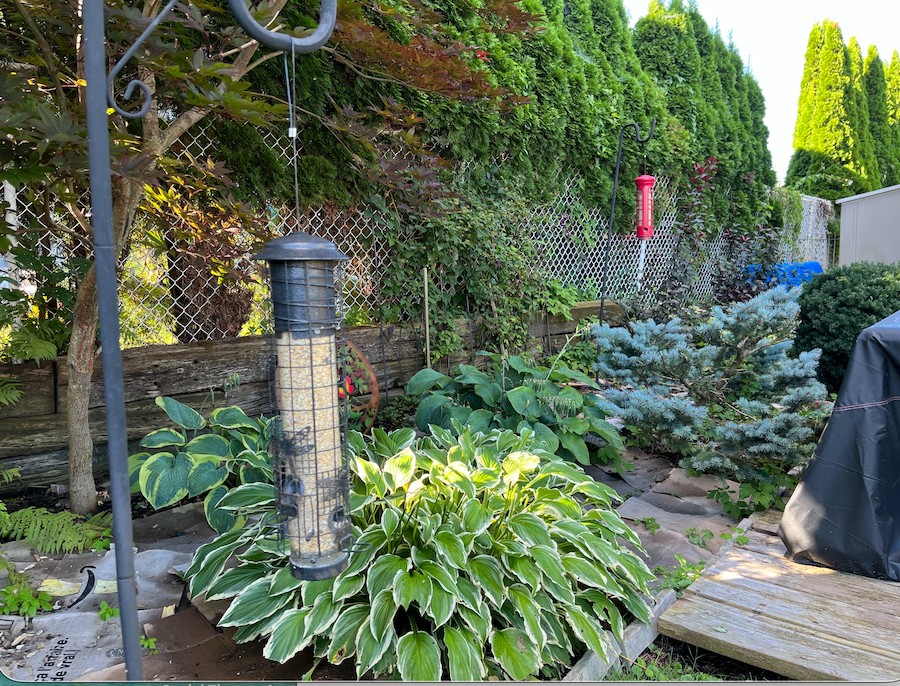
I bought a small bungalow that was surrounded in beautiful gardens. Not being a gardener up until then, I felt hopeful that this new hobby would be good for me. I’d be outside more and I loved the feeling of being surrounded in more nature. I even hired someone to put more gardens in about 6 years ago (trees, shrubs, tall grasses, flowers). The space created was and still is gorgeous and everyone calls it an oasis. Even the wildlife consider it their sanctuary. I love my small corner of the world. It brings me so much peace and joy in every season.
But gardens need a lot of tending. Flowers need to be deadheaded, shrubs need to be cut back, and weeds grow everywhere, all the time! Lots of weeds.
No matter how much time and effort I put into it, they keep popping up. I’ve spent a good many years on my knees, gloves on, trowel in hand, and compost bags at the ready. But no matter how much time I put in, there is always some new weed growth sprouting up somewhere.
I finally came to accept that weeding, pruning and cutting back are a part of the whole experience. They come part and parcel with gardens. They are not some extraneous aspect that somehow mistakenly were picked up and I can somehow just dispose of them once and be done with it.
Garden maintenance is a part of owning a home surrounded by gardens. It will never be gone fully, and sometimes you just have to stop pulling, grab a lounge chair, and start enjoying.
If I’m spending 50% of the time in my garden pulling weeds, I’ve lost sight of the reason for having gardens in the first place. They’re meant to be enjoyed, breathed in, listened to (cue bird songs, cricket chirps, toad bellows and the rustling of the wind through the leaves).
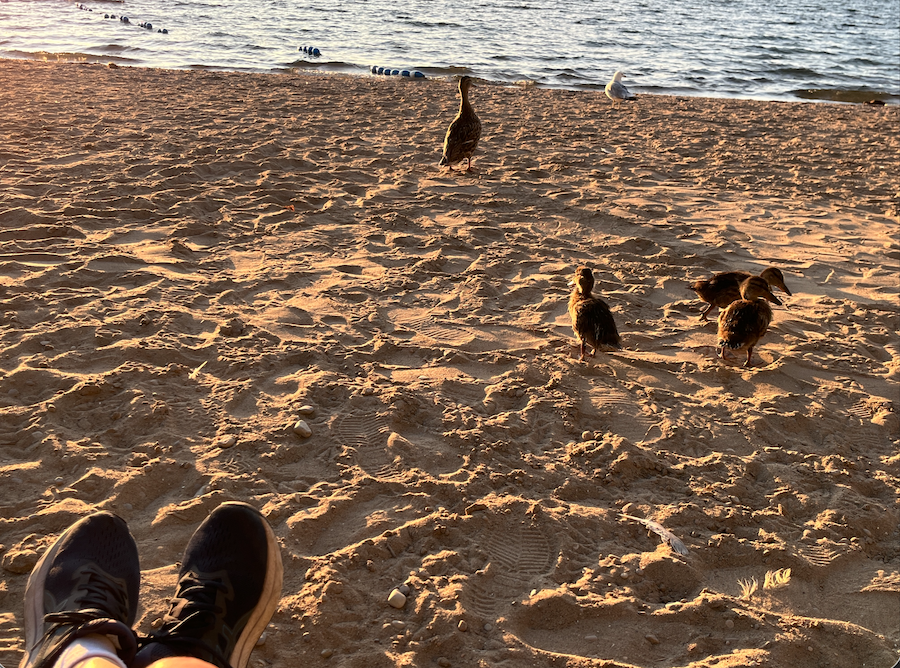
Gardens are a work of art, whether they are at their most tamed or are displaying all the various stages of growth and seasonal effects on that growth. They can only truly be appreciated to their fullest in stillness. So now, I make time to be still in them a lot more of the time.
Decision Paralysis, Vacation Edition
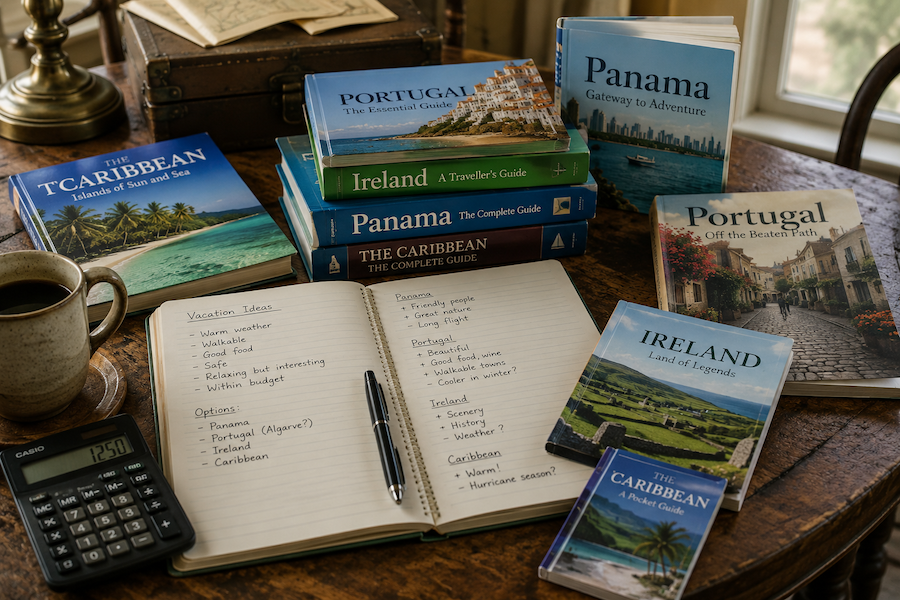
This came to a head recently when I decided to treat myself to a vacation after a genuinely rough 12 months. First I thought, well, I’m free to come and go since I no longer have a pet to care for. It’s my time to “go on walkabout” — the world is my oyster! The feeling was freeing, and gave me a sense of hope I hadn’t felt in some time.
And then the optimization slithered in through the back door: these are the go-go years the books talk about, the next five to seven years before it gets harder — better find my bucket list. Except I don’t have a bucket list. But these are my best years; I’m never going to have the same amount of energy as I do right now. I should be prioritizing what I see myself doing in the next 10 years and then do the ones requiring the most amount of energy in the first 3 years. But I don’t know what I want to do? Why don’t I have a bucket list? I should have one! Pressure, pressure, pressure.
Followed closely by the practical worries: would this trip actually meet my social and entertainment needs, or just look good on paper? What if the weather didn’t cooperate and I’d spent the money for nothing? Was this even the best use of that money, or would I resent it in three years when my fence and retaining wall need replacing? So there I sat, weighing a month away against a hypothetical fence repair, until I finally had to ask myself: when, exactly, did living become such a performance review?
The optimizing mindset makes real sense between twenty and fifty-five, when you’re building a career, competing against others, raising a family, paying down a mortgage. You have goals with clear edges, and efficiency genuinely serves you.
But somewhere past fifty-five or sixty, the architecture of a life starts to change, and the better question stops being “how do I optimize this” and becomes “what am I actually optimizing for?”
The Pressure to Age Well
Some of this, I think, comes from watching my mother. She’s in her early nineties, and her health has declined sharply over the last few years. The statistics say men typically spend their last two years in poor health, while women spend closer to a decade — and I’m watching that play out in real time, at close range. It’s not lost on me that this is probably fuelling my own refusal to ease up, even while my own body has been telling me for some time now, fairly loudly, that easing up might be the wiser move.
I still believe in staying strong, staying sharp, staying connected, staying financially secure. I’m not walking any of that back — I think it genuinely makes for better later years.
But underneath all of it runs a quieter, less generous message: if you don’t age well, it’s somehow your own fault. That message is everywhere once you start listening for it — in the well-meaning friend who looks at you aghast when she discovers you haven’t been taking collagen supplements, in the algorithm that assumes your poor health must mean you weren’t disciplined enough.
Some of ageing can be influenced. Some of it flatly cannot, no matter how hard you work at it. And even the parts we can influence don’t need to become a second full-time job.
Caring For Myself Versus Monitoring Myself
I’ve started to notice the difference between caring for myself and monitoring myself, and it’s a real distinction, not just semantics. For e.g., instead of heading to bed early because I feel a little tired, I’m heading to bed because last night I had a poor sleep score on my Fitbit. The behaviour on the surface is often identical. What’s changed is the relationship underneath it — whether I’m listening to my body, or auditing it like it’s a set of quarterly books.
Retirement Without a Scoreboard
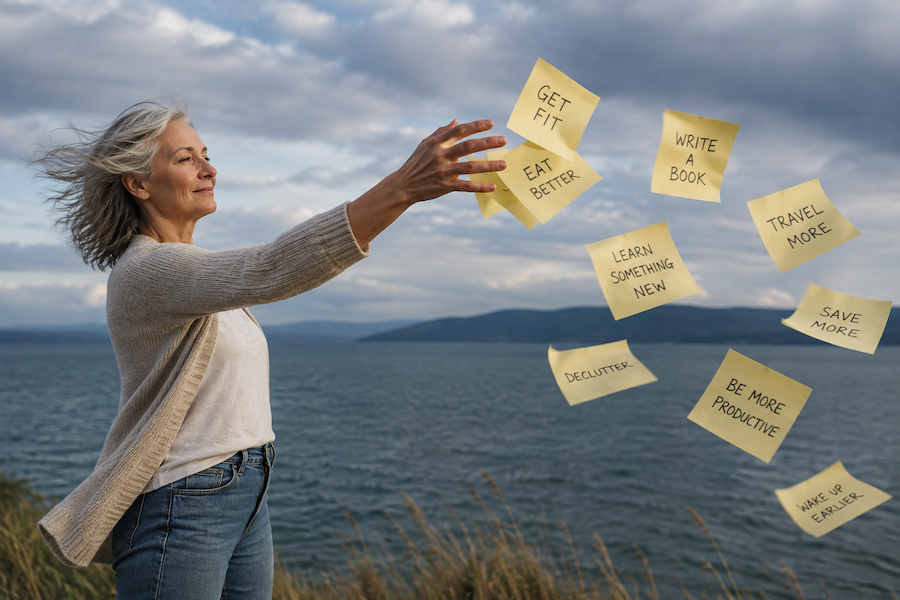
Retirement strips away most of the usual scoreboards. No more promotions, no more performance reviews, no more milestones with your name attached.
What’s left is something wonderfully uncomfortable: a life that doesn’t have to produce anything at all. But we’re so trained to measure ourselves that we invent new scoreboards anyway. I certainly did.
How many new skills have I learned? Am I more fit than last year? In what capacity have I given back to society through volunteering? Have I maintained my net worth, or at what rate is it depleting? How many close friends do I have now? Am I growing? Is my brain continuing to be challenged, or am I losing something, now that I’m not working? Did I make the most of today, whatever that even means?
When I first retired I was so afraid of losing my momentum and wasting precious years I decided to set and write down goals. Unsure of what I wanted to accomplish, I decided to “reverse engineer” the task. I pretended I was three years into retirement and I asked myself: if I looked back on how I spent my time and what I had accomplished, what was it I would need to see in order for me to feel I had spent my time well. That made it easy to then establish some concrete plans.
It was meant to keep me on track — a kind of insurance policy against future regret. I remember feeling almost smug about it, like I’d cracked something other retirees hadn’t.
What I didn’t account for was the required high-energy, fully functional body to pull it off. I guess I took it for granted to the point that I didn’t even think about it.
I didn’t account for three years of crushing unexplained vertigo (not the crystals kind) that would derail my ability to drive outside of just my own local city roads. That’ll put a stop to a lot of plans if you can’t even get past the city limits on many days.
I didn’t factor in the further decline of my mother and a need to become more involved.
And I certainly didn’t consider that I would come to wonder whether the course set was the one I really wanted.
So here I am, three years in, standing in the middle of a life that isn’t going anywhere in particular, asking myself what I’m even doing and why I’m doing it. I don’t even know where that carefully written plan is in my house. To be honest, I haven’t seen it in years, and I don’t even care to track it down.
To be fair, I’ve had quite a few new experiences since I walked away from my busy teaching career. But if I start listing them all now, I’ve just sucked myself back into the habit of feeling like I have to justify my life choices to myself, something I push back on, and it’s the whole point of this article.
What If Enough Is the Goal
Here’s the question I keep circling back to: what if my life isn’t supposed to be going anywhere right now? What if success after sixty isn’t accumulation, or improvement, or the next milestone, but something quieter — did I enjoy today, did I laugh, did I notice something beautiful, did I have a conversation that actually mattered, did I do something simply because I wanted to and for no other reason?
I’m starting to see real value in things that accomplish nothing measurable. Some say that a novel doesn’t make you smarter. Sitting outside doesn’t improve your output. Coffee with a friend doesn’t advance a goal. Watching a sunset doesn’t extend your life — but maybe they do. I genuinely have no idea — but either way, these might be exactly the things that make a life feel lived rather than managed. Call it the usefulness of useless things.
So maybe enough is the goal. My house is enough without the improvement projects. It’s never going to be in as good shape as it is today, even with all of its quirks and imperfections. I need to stop focusing on maintaining “resale value for when I sell” and simply enjoy it for a spell.
My body, as frustrating as it is right now, is enough. My retirement is good enough. Not because I’ve given up — that was the fear driving this entire train of thought all summer — but because I’ve finally stopped confusing more with better.
Maybe success after sixty isn’t about having somewhere left to get to. Maybe it’s simply being able to look around and think: I like being here.
I don’t want to become irrelevant, a ghost moving through the city. I don’t want to decline. But I’m no longer sure I want to keep becoming either. What if I just want to be?
If you enjoyed my article, please check out my others here


Leave a Reply