
How Bringing Back an Old-Fashioned Lifestyle May Be the Key

“What actually makes life feel manageable, grounded, and satisfying?”
Simple living is often misunderstood as minimalism or deprivation. In practice, it is about clarity—knowing what matters, reducing unnecessary complexity, and creating systems that support rather than drain us.
This cornerstone article explores simple living as a philosophy rather than a trend. It examines how simplicity intersects with finances, home life, health, and aging, particularly for those managing life independently.
Many practical and reflective posts on this blog stem from the principles outlined here, making this a foundational resource for intentional living.
In a world that prides itself on progress — smart homes, digital wallets, and instant everything — there’s a phenomenon unfolding. As technology speeds ahead and the cost of living rises, a growing number of people are moving backward in time, not in spirit, but in the lifestyle of simple living. At least I think it’s a phenomenon. At any rate, I’ve heard things centred around the “use it up, wear it out, make it do, or do without” a lot more lately, which is something I grew up with years ago.
Some do it out of necessity — because their budgets no longer stretch to match the “modern standard.” Others do it out of principle — rejecting waste, consumerism, and the sense that convenience has come at too high a cost. But whatever the reason, the effect is the same: some of us are starting to live with a nod to simpler times, one unplugged light bulb at a time.
Needing to Cut Back
For me, it began simply. I was stunned to see how much my utility bills had doubled in a short period of time, even though my lifestyle remained unchanged. Initially, I replaced my incandescent bulbs with LEDs to make them last longer and reduce energy use.
When my dishwasher broke, I went 2 whole years until I had saved enough money to replace it and pay in full (an outdated notion).
I began to unplug appliances when not in use; rely on fans more often instead of the AC; and I keep the blinds and curtains shut during summer days, the opposite in the winter.
A year ago, my oven stopped working. I’ve managed without it just fine. Living alone, not hosting dinner parties, and not being a foodie certainly helps. So, why spend the money unnecessarily? We all seem to think first about replacing, before asking how many times we’ve actually used something lately.
These are the more mindful choices many of us are increasingly embracing. We start by assessing our genuine needs and the true value of convenience.
For those concerned about the future, every dollar saved can be invested to grow wealth. In times ahead, we may deeply appreciate having the wisdom to live with less burden from excessive possessions.
I’ve looked around my own small place. What can I sell so it doesn’t feel so cramped? Do I really need 2 bikes? I don’t.
Even with my lawn service, seeding, fertilizing and treating the weeds, my lawn was still full of crabgrass and dandelions. I think I’ll skip the lawn service for now on. I’ll save hundreds of dollars. It never did look like the manicured frontage you see on magazine covers anyway. So what was I spending the money for?
Embracing the Night
My own neighborhood resembles a miniature Earth at Night map. The first-world countries glow brightly with light, while vast stretches of darkness mark the third-world regions. It’s a stark and powerful illustration of the divide between the haves and have-nots on our planet.
As I walk home from my neighbour’s house in the evening, I notice the clear contrast between homes that seem to be doing better financially in this uncertain year of 2025 and those that are not. Some houses remain mostly dark, even though cars are parked in the driveway and it’s clear people are inside.
Other houses glow with lights on every level. Christmas lights hang from eavestroughs and wrap around trees and porch railings. Large inflatable snowmen and reindeer stand proudly, their fans humming to keep them upright, waving and welcoming the holiday spirit to all the children in the neighbourhood since it’s mid-November.
Evenings have become a ritual of conserving light for me. I rely on a single lamp, turning it off as I leave one room and switching it on in the next. This act stems both from a firm belief that we are all energy hogs and could use less, coupled with a practical desire to lower my living expenses.
Sometimes, I imagine myself walking through the house with a small lantern, a flickering flame trailing me from room to room, the way it must have been for the early settlers. The motion feels the same — and surprisingly, so does the calm it brings. I may truly come to enjoy this return to simple living!

Some continue to live in the prosperity of the late 20th century, now the early 21st. Some are enduring conditions reminiscent of the 20th century, around the time of the stock market crash. It is eerie and unsettling to notice the striking parallels in news headlines from a century ago.
I wonder if warnings have been signalled, but most of us have been too caught up in the fast pace and self-absorption of this new era to notice.
‘The Washing’ Struggle is Real
Laundry days feel like a journey through time. I wash almost everything in cold water, except for sheets, which get special treatment. Most clothes are worn multiple times before making it to the basket. The dryer is saved exclusively for linens.
Everything else goes out on the line — my modern version with plastic reels and silicone clips, though sometimes I think I’d prefer the rusty squeak of the traditional ones, for nostalgia’s sake. Canadian climates require one to move the lines indoors for the majority of the months in a year. Annoying at best for somebody without a laundry room or basement, but still, I do it.

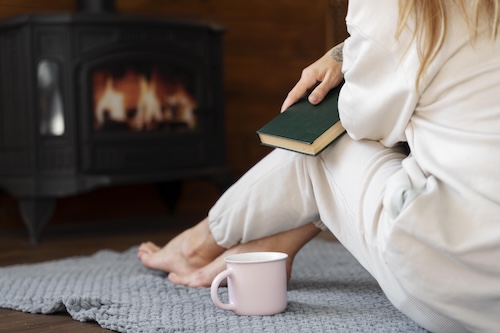
Inside, my home has become a curious blend of centuries: a laptop and other tech perched on the dining room table next to a rack of drying socks and T’s; a gas fireplace standing in for a wood stove, and a bizarre sense that I’m living both in 2025 and 1825 concurrently. Maybe this is what simple living looks like now.
When Progress Feels Like Pressure
Everywhere we look, progress demands that we keep up — faster Internet, smarter cars and endless upgrades. Yet for all this supposed advancement, people are struggling.
We’re told we’ve never been more connected. But if you listen closely — to podcasts, news interviews, or the quiet confessions of friends — what you’ll actually hear is something very different. People of all ages, from teenagers to retirees, are lonely. Deeply lonely. Even many in committed relationships say they are unsatisfied.
Despite our screens lighting up with notifications, messages, and friend lists, a startling number of people feel completely disconnected from others. Psychologists, social scientists, and medical professionals have been sounding the alarm: loneliness is now being described as an epidemic.
This isn’t just an emotional ache; it’s a health issue. Loneliness has been linked to higher rates of heart disease, depression, cognitive decline, and early mortality. Yet we scroll endlessly, trying to fill a void that technology can’t seem to touch.
Somewhere along the line, we traded presence for access. We can reach anyone, anywhere, anytime — but how often do we truly connect?
Perhaps it’s time for community dances, neighbourhood projects and corner pubs to make a real comeback.
The Irony of Connection
I think what we’re really craving isn’t connection in the digital sense. It’s attachment — that feeling of being emotionally anchored to someone or something real.
It’s the sound of a real voice, not a text tone.
The smell of paper and ink, not the blue glow of a screen.
The feeling of a real hug, not an emoji.
When we speak to someone in person, they respond. If they didn’t, it would be a very real indication they were dismissing you. But today’s unreplied-to texts over days, or even never, despite your last statement being one that would require a response in a face-to-face conversation, doesn’t feel good. Have you offended them, do they just not care, are they being dismissive, did they get interrupted and they’ll reply later, or did they just forget? It’s a terrible form of communication, and yet it has now become the primary way.
It’s become painfully clear that, as a society, we’ve been overfed with convenience and undernourished by meaning.
When I look at my own habits, I see how easy it’s been to drift away from the things that once made life rich. I used to write letters to friends. Actual letters. I can’t remember the last time I received one — and I honestly think if one arrived today, I’d cry.
There’s something so human about a handwritten letter. The imperfect slant of someone’s handwriting, the small smudge where their hand brushed the ink, the signing of their name — it’s intimate. It’s a piece of them, physically sent across distance.
A couple of years ago, I dug out an old stash of unused Christmas cards and filled them with heartfelt messages telling the recipients how much they mean to me. I sent them to family and friends near and far. It felt wonderful, but I wasn’t sure how they were received. Few people mentioned getting them; one made a joke saying, “Do people still do that?” and only one reciprocated. Not that I did it to get something in return, but the silence also felt a little like a gentle rebuke. “That’s not how we do things now, don’t you know that?”.
Unsure of what to make of it, I decided not to send cards last year and returned to our more modern, impersonal ways. That didn’t feel right either. This year, honestly, I’m undecided. Deep down, I want to send cards again, but my budget reminds me not to spend on gestures that might go unappreciated. What to do, what to do.

The Incessant Questionning
Daily choices now come with calculations: Is it cheaper to take the chill off with gas heat, or the electric heat pump? For now, I’m betting on gas, though based on my latest bill, it’s starting to feel like a losing wager.
With waste water being a large chunk of the water bill, is it better to just “let it mellow, if it’s yellow”?
How many social plans do I have this month that have an expense attached to them? The answer to that will determine whether I order the main or eat beforehand and go with an appetizer when out with friends for dinner.
Then I find myself wondering: could I skip this year’s fireplace and boiler servicing? Everything seems to be working fine. But what if skipping it leads to a problem later? How do I know the HVAC company isn’t padding the invoice with “preventative maintenance” that isn’t really necessary? Do I have the extra money to find out the hard way?
We’ve become so distrustful of today’s insincere way of doing business. It’s no longer a family operation that my family have done business with for decades; it’s a faceless enterprise.
And then there’s the cat — does she really need that rabies vaccine if she never goes outside? But she does visit the vet, where other animals are around. Did people use to take their animals to the vet when they weren’t sick just for an annual checkup?
In the past, my vet has suggested I could bring my cat in 3 days a week to be put on a treadmill to work on her excess fat, and I might want to book a dental appointment for preventative gum disease. All at an outrageous cost of course.
We never used to treat our pets on par with human family members. I’m feeling a touch of guilt because I do love her so much, and she means the world to me. But I also can’t afford any extras for her. So I declined most, but the cat does keep her shot.
I even found myself debating whether I could skip feeding the birds this winter. They’ve survived harsh Canadian seasons for centuries without me. But I love watching them flutter at the feeder, tiny wings fluffing up in the cold winter air. They bring me a joy that’s hard to measure in dollars. And joy, I’ve learned, has to count for something.
So for now, the birds stay.

Staying Warm in a Cold Climate
Heavy quilts, fleece-lined slippers, and a hot water bottle in the sheets have become my new bedtime routines. I feel like I’m living in a Charles Dickens novel. I rarely turn up the thermostat — partly to save money, partly because I’ve read that cooler temperatures help you sleep better.
My drafty old cottage loses heat quickly when the bitter North winds blowing across the lake make an appearance. What more can I do? How did they keep the rooms warm in the farmhouses of yesteryear during those long winter months? Maybe that’s why people wore sleeping caps. I’m going to have to investigate, because turning up the heat is to be avoided as much as possible.
The cat, of course, doesn’t share my enthusiasm for frugality. When she curls beside me, her little ears cold against my arm, I imagine her gazing across the lane at my neighbour’s 4,000-square-foot brick house, dreaming of warmer rooms and better thermostats.
But maybe they’re cold too. Maybe the property taxes are strangling them, and they look over at my little wood siding bungalow, thinking, ‘she’s the lucky one, why did we have to buy such a large place?‘. Maybe they are feeling an equal sense of disbelief at how much times have changed.
We’re all quietly adjusting, I think. Learning to live smaller again.
The Push and Pull of New and Old Ways
There’s a curious push and pull I feel between the ‘simple living’ mindset that purports to help one feel a sense of authenticity and less stress and the lure and fun of keeping up with all of the modern shifts in lifestyle.
I use AI daily and feel I benefit from many of the improvements in inventions for everyday living. It keeps me learning, and it helps me to be creative in a different way than woodworking, painting or cooking from scratch might. I’m excited about all the possibilities coming down the pipe.
And I’m worried too. Unsure how AI will dramatically change the world as we know it in too short a time for us all to adjust. Will there really be significant job loss at a level we can’t even begin to imagine, within 3 years’ time? Will Canada begin to resemble a 2nd world country? Maybe I should stop watching so many YouTube videos about this one.
Maybe it’s better to remain in blissful ignorance like so many others. Pretend the trends aren’t trends. But I can’t shake the feeling that there’s a deep sense of urgency, and everyone should tighten their belts, prepare for the worst, just to be on the safe side.
Home Size Ups and Downs
People used to live in much smaller homes, and still do in many parts of the world — then, somewhere around the 1980s, everything started ballooning here in Canada.
Suddenly, a family of four needed a house big enough to echo in. Eventually, that was considered fairly modest. Now, those same and even bigger houses are being divided up for rentals, or adult children moving back home, some even with grandkids in tow. My own neighbourhood suddenly has far more basement apartments, and I’ve never seen so many kids, and a greater need for parking, as houses hold more people in them.
It turns out that the Millennial and Gen Z singles are less interested in paying out thousands of dollars a month on small square footage, and would rather live in a larger place with family and smaller bills, than live so cramped on their own.
We’ll just have to wait and see how the tides shift on this lifestyle choice down the road. Despite the benefits, for those who are truly solo at heart, I think it would be a tough pill to swallow. I don’t think I could ever have lived happily with in-laws when I was married, despite how nice they were. And yet I do see the value.
Either way, I’m suddenly grateful to live in a smaller space (900 sq ft).
Cutting Back Or Returning to Something
It’s a bit depressing but it also may just be the uncomfortable space in another lifestyle revolution. One that propels us forward in ways we will one day look back on with gratitude.
The more I pull back — using less, wasting less, wanting less — the more I feel a quiet satisfaction I hadn’t noticed before. What used to feel like “cutting back” now is beginning to feel like “returning to something.”
There’s rhythm in this slower way — awareness every time I choose to walk somewhere instead of driving.
I do feel a bit “Little House on the Prairie-ish” when I arrive to the potluck with my brownies wrapped in a clean kitchen towel I plan to take back with me. But they sure do feel more “made with love” than they do in a plastic Dollar Store tub covered in Cling Wrap.
Remembering What We Lost Along the Way
Maybe this is what living forward looks like — not racing ahead, but remembering what we lost along the way.
It’s oddly grounding. I don’t know if the generations behind us…Millenials and Gen Z will feel the same way. Maybe because of earlier programming deep down inside I feel a comfort they never will.
I hope I can find a way to pass on this mindset to those younger than I. That the real meaning and purpose of life goes far beyond anything material. It all comes down to love and relationships, basic physical comforts and belonging. It’s what healthy aging is all about.
I heard recently that the fastest growing demographic in churches in Canada is the Gen Z group. It seems they are looking for something more too. Something that is meaningful. Real connections are what they crave, as their world becomes increasingly artificial. A return of the faith-based community hub. Interesting.
Maybe Simplicity Really is the Answer
Technology and modernity aren’t the enemy; it’s just that the pace of it all has pulled us too far from our roots. Sometimes I worry about how quickly everything is changing — how unprepared we are for the speed of it all.
In contrast, the old ways ask so little of us. They don’t demand subscriptions or upgrades. They just are. They are human-centred in ways that modernity is lacking.
Maybe that’s why, for all its challenges, this shift back toward simplicity feels oddly hopeful. As if, in tightening our belts and turning down our thermostats, we might be finding something that was missing all along — authenticity, peace, maybe even a bit of grace.
It’s not that I’m against progress. I’m just starting to think that progress might have to share the stage with preservation — of sanity, of meaning, of the small, tangible pleasures that keep us human.
Maybe the future isn’t about what’s next at all. Maybe it’s about learning how to live forward by looking back. What old-style traditions and habits can you bring back into your own little world that may be meaningful to you?
To read more of my blogs why not try making your home feel like you, or solos and money, click on the links.


Leave a Reply to Shari Thorne Cancel reply