

Lately, a question keeps popping into my head. Usually when I’m standing in front of something in my house that needs attention — a dripping tap, a snow-packed driveway, or a suspicious crack in the drywall that definitely wasn’t there last week.
Am I still making the right call by owning a home?
On the surface, homeownership feels like the safe bet. No landlord changing his mind and deciding he wants you out. No rent hikes beyond the 2% you planned for. No surprise notices slipped under the door. I control my space. I choose my paint colours. I have fewer neighbours to decrease the odds of a challenging one with which to live harmoniously (if I’m lucky).
For those of us living alone, that control feels especially important. After all, we’ve built our lives around self-reliance. The idea of handing responsibility for our housing to a landlord or building manager can feel like stepping backward.
But underneath that comfort is a quieter reality. Owning a home as a single woman in my 60s isn’t just about independence. It’s also about cost, energy, risk — and whether in future years I’ll be being practical or simply hanging on because this is what I’ve always done.
And I know I’m not the only one asking.
The Big Picture Nobody Talks About
Canadians are famous for loving homeownership. According to Stats Canada, homeownership rates peak in our late 60s. About 75% of people aged 65–69 own their homes.
Baby Boomers now account for more than 40% of all Canadian homeowners. And single women (all ages) make up 27% of all homeowners in Canada.
So if you’re a woman in your 60s living in a home you own, you’re not unusual at all. You’re right in the middle of the trend.
And there’s a reason many of us hold tightly to that house key.
We grew up in a time when women often couldn’t get a mortgage or put their name on a deed without a male co-signer. Homeownership wasn’t just a financial goal — it was proof of independence.
Our mothers taught us to value it, because for them, housing security often depended on choosing the right man. If they didn’t, their safety, stability, and even survival could be at risk.
That’s a lot of “ifs.”
So yes, owning a home carries emotional weight. It represents freedom from needing a male benefactor for security. No wonder the idea of letting go can feel so loaded.
But another statistic caught my attention. Between 2016 and 2021, the number of Canadian homeowners aged 75–79 dropped — a sign that many seniors do eventually sell.
At the same time, CMHC research shows that most Canadians don’t give up their homes until very late in life, often well into their 80s or even 90s. In my view, by that point, many have simply stayed too long. Not all of course, but many.
There’s an important difference between choosing to remain in your home because you’ve carefully weighed the pros and cons, and staying because the idea of leaving has become overwhelming.
Packing, decluttering, selling, finding a new place, learning a new environment, and building new social connections is a big undertaking. The longer we wait, the harder that transition becomes.
Older people tend to find many situations more stressful than they would have for the same situation when they were younger.
At that stage, staying may no longer be a confident choice. It can become the default simply because moving feels physically and emotionally too difficult.
In other words, many of us stay put for a long time — even when the house is too much for us.
That gap between what we can do and what we should keep doing is where the real conversation begins.
The Part Nobody Bragged About For Retirees
For most of our lives, we were told that owning a home was the ultimate success story.
Work hard. Buy a house. Pay it off. Retire safely.
No one talked about the part where, decades later, you’re the only person responsible for every single thing that house needs.
The roof doesn’t care that you’re tired.
The furnace doesn’t care that you’re on a fixed income now.
The raccoon in the attic definitely doesn’t care that you live alone and have no idea what to do.
Most couples share the responsibilities, but singles often have no choice but to manage them alone.
And this is where the math quietly changes for most women as solo homeowners.

The DIY Reality Check
Here’s something we rarely say out loud: many women my age never learned home repair skills. Not because we couldn’t — but because we weren’t expected to.
So when something breaks, I don’t grab a toolbox. I grab my phone.
A $25 part becomes a $180 service call.
A simple ladder job becomes a paid contractor.
A “quick fix” becomes a lengthy exercise with tradespeople who don’t call you back, or sketchy quotes that give you the sense they’re trying to take advantage of your single status and lack of knowledge.
For some unscrupulous service companies, when they see a single older woman, they think “ca-ching”.
Could I learn some of these skills now? Possibly.
Will I want to climb ladders or crawl under sinks at 67? Not likely.
At some point, safety matters more than pride.
And those small service calls add up. A running toilet, a clogged drain, a weird noise from the air conditioner, weather stripping, gutter cleaning — each one isn’t disastrous. But together they quietly drain thousands from a retirement budget.
My own recent example would be the $800 service call made just a couple of months ago, to fix a leaking washing machine. Without the strength to pull out the stackable duo unit that sits in my laundry closet, I did not have the ability to:
- pull out the machine to investigate and then place a rubber mat under said heavy machines, to catch the water,
- replace the hose that was leaking,
- replace the floor trim and drywall that had gotten wet,
- clean out the dryer vent leading out of the home with the shop vac while squeezed back behind the machines.
This is $800, I feel certain a solo male homeowner would not have paid for.
If you’re paying professionals for tasks that were once handled by a handy partner, the cost difference can easily reach $2,000 to $5,000 a year. That’s real money. That’s groceries. Travel. A cushion for medical needs. Or simply peace of mind.
The “What If I Get Sick?” Question
This is the one that sits heaviest for me.
If I get the flu, no big deal.
If I need to have surgery, or need rehab for a month — who is looking after the house?
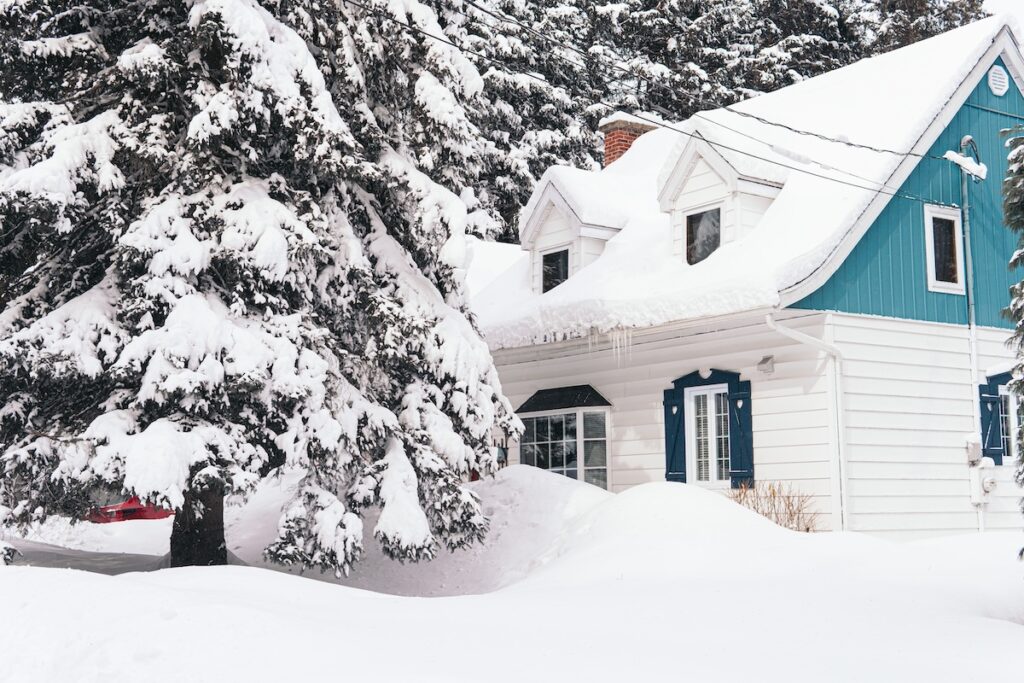
Who shovels the snow so it looks like someone is living there?
Who checks the pipes in a cold snap?
Who makes sure the place is monitored to ensure insurance will cover it should there be a need for a claim?
When you live alone, your house doesn’t pause just because you do.
Many of us rely quietly on adult children, relatives, neighbours, or friends. Often generously. Often without complaint. But I have to ask myself:
Am I choosing independence?
Or am I quietly assigning someone else a second unpaid job?
Of course they’ll agree to help you out. But are they silently resenting you for placing this burden upon them. Are they secretly thinking that though you say you are living independently, are you really, if you need to call on others to get by?
Where is that line between taking responsibility for your choices, and having your own choices impact others? My own mother insisted she was living independently. But she wasn’t.
Her choice to remain on her own when she really couldn’t handle it was really just shifting the responsibility to my sister and I, and we didn’t feel we had a say in that decision. We didn’t want to be her property managers.
We tried for years to get her to see that she would be better off living in a location that removed that responsibility from her/us, but she was resistant to any suggestions that she wasn’t keeping up.
These thoughts weigh heavily on me as I reflect on my own choices with age and what responsibilities may fall to my adult children. Owning a home only adds to the challenge, increasing the burden of maintaining both the property and the house itself.
There’s no universal right answer — but it’s a question worth asking honestly.
The Real Cost of “Owning”
Whether coupled or solo, we’re taught to compare mortgage payments to rent. But by our 60s, many of us don’t have a mortgage anymore. So the true comparison isn’t mortgage versus rent. It isn’t even property taxes and insurance vs. rent.
It’s ownership costs versus rental costs.
Homeownership comes with a steady drip of expenses:
Property taxes
Insurance
Roof & window repair
Furnace & AC maintenance and replacement
Plumbing and electrical surprises
Lawn & garden care
Snow removal equipment upkeep or a service
Fence & Driveway repairs
Tree trimming
Other Exterior upkeep
None of these feel huge on their own. Together, they quietly eat $4,000 to $8,000 a year in a typical detached home — sometimes more if a major repair lands at the wrong time.
And here’s the uncomfortable truth:
Much of what I pay as a homeowner doesn’t contribute to building wealth or increase the home’s value. Items like a properly secured fence gate, a re-sanded and stained deck, a trimmed tree, or a functioning dishwasher don’t affect the market price of the home.
It’s simply keeping the house functioning.
Why Not Just Stay Forever?
Many women choose to stay, and for many, it’s the best choice. Emotional connections run deep. It might be the home where you shared joyful moments with your partner.
Familiar streets and neighbours provide comfort. They may have supported you as you rebuilt your life after a difficult marriage.
Memories hold great significance. It could be the place where you raised your children.
There is nothing wrong with choosing to stay.
But I can’t ignore this:
The longer I stay, the harder a move becomes if I ever need one. Moves made in crisis are rushed. You may not get the same good price for your home if your move is forced during a downturn in the market.
And what are we even to make of all the unsettled news and predictions about the vast changes that will come our way in the near future? Predictions related to geopolitical tensions and the exponential growth in AI. How will this impact our economic stability?
Oh, if we only had a crystal ball to help us with these big questions, which I have no answer to.
But consider that moves made earlier are choices based on ‘the right time, under the right conditions’. Plus, having the equity locked in your home keeps it unusable.
Supposedly women who plan their transitions in their late 60s or early 70s often report less stress, more options, and better financial outcomes than those forced into sudden decisions later by health events.
I’m sure I’d rather make a choice than have one made for me. But when is the right time to make that move?
Renters write one cheque.
Homeowners write many — just to different people.

Renting Isn’t Failure
We grew up hearing that renting meant you “didn’t make it.” That story no longer fits modern reality.
In Ontario and across Canada thousands of women over 65 are choosing rental living — not as a last resort, but as a strategy.
Renting later in life can mean:
No surprise repair bills
No maintenance to manage
Predictable monthly costs
Easier travel
Easier moves if health changes
Buildings designed for aging bodies
On-site management when something breaks
Less house.
More life.
That’s not giving up.
That’s adapting.
I can only speak from one recent example of a woman I know. After her husband died, she sold the big home in the suburbs of my small city, moved into a downtown apartment rental, and is extremely happy with her choice.
In her late 60s, as she forges on, creating a new life for herself as a single woman, she is developing new friends, joining new groups, getting involved in city organizations and travelling.
She loves that she can walk everywhere, that she can just lock her door and be gone for an unspecified length of time, with no worries about the house she left behind. She is feeling free.
Just based on the look of joy and contentment on her face with each visit, I can see that the stress and responsibility are being shed, and this was clearly the right move for her to make. Is it a large study? Nope. It’s one woman.
She does make me wonder—when too many household troubles come crashing down in rapid succession, leaving me no time to recover emotionally, will there come a moment when I too must break free? A time to liberate myself and my money from a life chained too tightly to responsibility?
So Where Does That Leave Me?
Currently, I’m still a homeowner and truly enjoy my space. I appreciate the simple pleasure of closing my own front door. Honestly, there aren’t any rental apartment buildings in the area I like to live, so it’s not even a consideration for now. If rental options start to appear nearby in the future, I might reconsider.
I’m also paying attention.
I’m watching the costs.
Watching my energy level.
Watching how much help I quietly rely on.
And I’m asking myself — not in panic, not in crisis — just honestly:
Is this still serving me?
Or am I serving the house?
For now the weight tips in favour of owning, but that doesn’t mean that a move isn’t somewhere along my 10 year horizon.

If You’re Asking the Same Question
You’re not alone.
This isn’t about telling women what they should do. It’s about giving ourselves permission to question old assumptions.
Because independence isn’t about owning property.
Independence is about choosing the life that fits the stage you’re in now — not the one you worked toward 30 years ago.
And whatever answer you come to — staying or selling — it should be a choice, not a default.
What are your thoughts about your own living situation as a single woman in the future? We’d love to hear. Share in the comments by scrolling down on this page.
If you enjoyed this article, I have one about solos in demanding careers that may be of interest to you. Click here
For my YouTube video on decluttering, click here


Leave a Reply